
When we peek inside an LLM's head, in what form is meaning represented? In this report, with the opposition between the Park paper and the Golechha blog as the axis, we examine the linear representation hypothesis (LRH) and feature geometry through systematic reproduction experiments across 4 models × 30 seeds. The extension to Japanese WordNet × LLM-jp-4-8B and the quantification of Park's 70% independent subsample diagnostic are the original parts of this experiment. To preview the conclusion: as Golechha argues, near-zero cosine alone is insufficient evidence; yet Park's additional diagnostic (independent subsamples) does appear to retain power to capture structure remaining in the trained unembedding — a two-sided landing.
Chapter 1. Introduction
When we peek inside an LLM's head, in what form is meaning represented? This is a question that has been asked for a long time in interpretability research, and it is an important one. In fact, with the rapid rise in LLM capabilities — exemplified by Anthropic's Claude Mythos, released as a preview in April 2026 — and their practical encroachment even into advanced domains such as cybersecurity, the work of reading their interior at the part level — the research area called mechanistic interpretability — has become the core of AI safety and alignment.
Among these, the geometric interpretation that this report deals with — the direction of reading how the structure of meaning is embedded into the high-dimensional vector space of internal states — sits at the foundation. The starting-point hypothesis is the central theme of this report: the Linear Representation Hypothesis (LRH) — the simple view that "concepts are represented as directions in a vector space."
A famous example is the following curious equation found in word2vec.
v(king) - v(man) + v(woman) ≈ v(queen)
It can be read as: the semantic transformation "male → female" appears as a fixed direction in the vector space. Are there even richer such "directionalities of meaning" living inside LLMs? That is the central question of LRH.
The Reach and Limits of the Linear Representation Hypothesis
LRH has changed shape considerably over the past dozen-plus years, and in Transformer-based LLMs, empirical studies from around 2023 have confirmed one after another that various semantic features are embedded as directions in the residual stream (the information stream that runs through each layer). World models in Othello-GPT, truthfulness in Inference-Time Intervention (ITI), and the truth direction in Contrastive Consistent Search (CCS), and so on. The detailed flow of these is reviewed as a timeline in Chapter 2.
On the applied side as well, LRH has played a central role as the foundation of recent interpretability tools. For example, feature decomposition using a Sparse Autoencoder (SAE) depends on the premise that "features are represented as directions," and representation engineering (behavior control by activation editing) can also be read as a corollary of LRH — "if you add or subtract the direction vector corresponding to a certain concept, the output moves." As a shared vocabulary for peeking into and operating on the insides of LLMs, LRH is now at a position that one could call the foundation of interpretability.
Even so, LRH has limits. There are counterexamples such as Engels et al. (2024) showing that periodic concepts such as days of the week or months are represented not as one-dimensional directions but as two-dimensional circles; and there are also questions that remain, such as whether "direction = meaning" should be associated naively to begin with, and whether the observed geometry is genuine or a high-dimensional mirage.
When considering the reach and limits of LRH, there are two pieces of literature that are especially worth referring to recently. These are the Park paper and the Golechha blog, which become the axis of this report.
Why We Take Up the Park Paper and the Golechha Blog
One is two papers by Park et al.
- Park, Choe, Veitch (2023). The Linear Representation Hypothesis and the Geometry of Large Language Models (ICML 2024, ~632 citations)
- Park, Choe, Jiang, Veitch (2024). The Geometry of Categorical and Hierarchical Concepts in Large Language Models (ICLR 2025, ~160 citations)
Park et al. first, in the 2023 paper, gave a mathematical foothold to LRH, which until then had been spoken of intuitively. In the subsequent 2024 paper, on top of that foothold, they put forward a very strong claim — "category concepts are represented as polytopes, and hierarchical relations as orthogonality." On the topic of representation geometry in LLMs, the Park paper is now one of the works with the strongest presence.
The other is the Golechha et al. (2025) ICLR Blogposts article Intricacies of Feature Geometry in Large Language Models, which raises objections to Park's claims head-on. This is a peer-reviewed critical article, also selected as a Best Blog Award Runner-up, and they ask: "Are Park's figures really looking at semantic hierarchy? Couldn't the same kind of figure be drawn even with semantically nonsensical data?"
When considering the reach and limits of LRH, reading Park's bold claims and Golechha's sharp rebuttals as a pair is the best starting point. Park formalizes "how strongly LRH can be claimed," and Golechha attacks where those claims are fragile. Reading the two side by side brings into three dimensions the question of "where LRH can be claimed, and from where it should be doubted."
What We Tried in This Report
It would not be interesting just to mimic existing experiments, so we added the following points uniquely in this experiment.
- Extension to Japanese WordNet: Park's official experiments are English-only. In this experiment, we built a Japanese WordNet mapping from Japanese lemmas of the Open Multilingual WordNet and ran the same diagnostics on LLM-jp-4-8B (a Japanese model).
- Cross-comparison across 4 models: Park's Gemma + LLaMA plus Qwen3.5-2B and LLM-jp, for a total of 4 models. We checked whether the same phenomenon is visible even in models from different series.
- Quantifying Park's 70% independent subsample diagnostic: This diagnostic was presented in Park's Fig 5 as a Gemma-2B-only, visual comparison. In this experiment we incorporated it as
B4(subsample alone) andB5(subsample + shuffle), and extended it into a quantitative comparison with means and 95% confidence intervals over 4 models × 3 datasets × 30 seeds (Golechha does not take up this diagnostic).
To preview, the result lands on a two-sided position. As Golechha argues, near-zero cosine alone is insufficient evidence; but Park's additional diagnostic (independent subsamples) does seem to retain power to capture structure that remains in the trained unembedding.
Chapter 2. Timeline of the Linear Representation Hypothesis
LRH is not a theory proposed one day out of the blue, but a way of thinking that gradually took shape over a dozen-plus years. In this chapter, we look back at the flow roughly, divided into 6 stages.
The Era of Word Embeddings (2013–2014)
The story begins with Mikolov et al.'s word2vec in 2013. The famous analogy "subtracting man from king and adding woman gives queen" was reported as holding within the vector space, and the surprising idea that semantic transformations appear as "directions" spread along with it. The next year, Pennington et al.'s GloVe showed that similar linear structure emerges from another method as well — factorizing word co-occurrence matrices. The view that this is not a phenomenon peculiar to neural networks but seems to reflect something more universal began to grow at this time.
Methodologies for Measuring "Direction = Concept" (2017–2019)
From around 2017, the toolkit for peeking into the insides of deep learning models came together. Alain & Bengio (2017)'s linear probe systematized the method of fitting a linear classifier to the activations at each layer and looking at the accuracy to measure "whether a certain concept can be extracted linearly," and it became the de facto standard for LRH verification afterward. Hewitt & Manning (2019) extended this idea to syntactic structure, showing that dependency parse trees can be reconstructed from intermediate layers of BERT through linear transformations alone. In parallel, Kim et al. (2018)'s Testing with Concept Activation Vectors (TCAV) approached the same question from another angle — by collecting examples of a concept, estimating its direction vector, and explaining the model's decisions through sensitivity to that direction, they operationally defined "direction = concept."
The work that stepped directly into the geometric side was Reif et al. (2019)'s Visualizing and Measuring the Geometry of BERT. It was a representative work that visualized BERT's internal representations and showed that syntax and word sense (the distinction of meaning for polysemous words) are geometrically separated, and it created the flow of developing the "direction = meaning" view as a story of the geometry inside Transformers.
The Transformer Era and Superposition (2021–2023)
As LLMs moved to Transformer-based architectures, the object of interest moved from word embeddings to the residual stream (the information stream that runs through each layer). The view spread that features such as sentiment, refusal, truth/falsity, and grammatical attributes might be embedded as directions in the residual stream.
What gave the theoretical background was Elhage et al. (2022)'s Toy Models of Superposition. The observation that "when handling more features than there are neurons, the model represents features by superposition" provided a natural motivation for the view of "direction = feature." Around the same time, Olsson et al. (2022)'s In-context Learning and Induction Heads showed that specific attention heads inside Transformers function as circuits that "pull from past sequences and output them."
On the empirical side, Meng et al. (2022)'s Locating and Editing Factual Associations in GPT (ROME) succeeded at direct intervention on factual knowledge by directly editing the MLP layer weights that carry specific factual knowledge. Subsequently, Turner et al. (2023)'s activation addition and steering showed that simply adding direction vectors into the internal state shifts the output tendency.
The Empirical Rush for LRH (2023)
2023 was the "year of empirical verification" for LRH. Li et al. (2023a)'s Othello-GPT showed that the board state of pieces in Othello is linearly represented inside a small Transformer trained only on Othello moves, becoming a representative example in a synthetic controlled environment. Gurnee & Tegmark (2023) stepped into more natural domains, showing that geographic coordinates and time information can be linearly decoded from inside LLMs, giving the main grounds for the argument that "LLMs have a world model." On the applied side, Li et al. (2023b)'s Inference-Time Intervention (ITI) stands out. By shifting the internal state in the "truthfulness" direction, they raised Alpaca's TruthfulQA accuracy from 32.5% to 65.1%, showing that LRH is not just a beautiful phenomenon but also a practical tool. Burns et al. (2023)'s Contrastive Consistent Search (CCS) proposed a method for discovering the truth direction without supervision and showed it functions consistently across 6 models and 10 datasets.
Another important flow that rose at this time is feature decomposition by Sparse Autoencoders (SAE). Cunningham et al. (2023) and, around the same time, Bricken et al. (2023) from Anthropic with Towards Monosemanticity showed that reconstructing the residual stream with an SAE pulls out a large number of interpretable, monosemantic features.
Formalization and Limit-Setting (2023–2024)
As empirical evidence piled up, formalization that handles the words "direction," "concept," and "causality" rigorously became necessary. Park et al. (2023) redefined binary concepts with counterfactual pairs and, by introducing the tool of the whitened unembedding space (causal inner product), gave LRH a solid mathematical foothold. The subsequent Park et al. (2024) extended this to multi-valued categories and hierarchical relations, generalizing "direction" to "figures with multiple vertices" and "orthogonality of parent-child relations." The subject of this report's Chapter 3 onward is this extended version.
In parallel with formalization, the procedures for asserting LRH also became standardized. Marks & Tegmark (2024)'s Geometry of Truth showed three-fold evidence — visualization, generalization to other domains, and output change by causal intervention — in a consistent framework, becoming a methodological monument for LRH empirical verification. On the scale side, Templeton et al. (2024)'s Scaling Monosemanticity (Anthropic) ran an SAE on Claude 3 Sonnet and pulled out 34 million interpretable features.
However, not everything fits within linearity. Engels et al. (2024) showed that periodic concepts such as days of the week or months are represented not as one-dimensional directions but as two-dimensional circles, presenting an important "weak counterexample" to LRH.
Theoretical Underpinning from Statistical Symmetry (2026)
All the research up to this point has piled up the observation that "LRH appears to hold," but the theoretical grounding — why this is so, and why exceptions like Engels' example exist — has long remained as homework.
Karkada et al. (2026)'s Symmetry in Language Statistics Shapes the Geometry of Model Representations presents a direct answer to that homework. Their claim is that the statistical symmetries of language data directly shape the representation geometry of the trained model. Furthermore, even "the necessary and sufficient condition for a feature to be represented as a one-dimensional linear direction" can be written down in the language of symmetry. Days of the week or months become circles because they intrinsically have cyclic symmetry — that's the story.
Chapter 3. The Park Paper and Our Reproduction Experiment
From here we enter the main topic, the Park paper.
The Main Claims of the Park Paper
The central claim of the Park paper (2024), in one sentence, is this.
Inside the unembedding space that an LLM has learned, the hierarchy of meaning that humans have organized in WordNet is embedded in a fairly clean, corresponding form. Specifically, superordinate and subordinate concepts are arranged as "orthogonal directions," and values belonging to the same category are arranged as "vertices of a polytope," neatly.
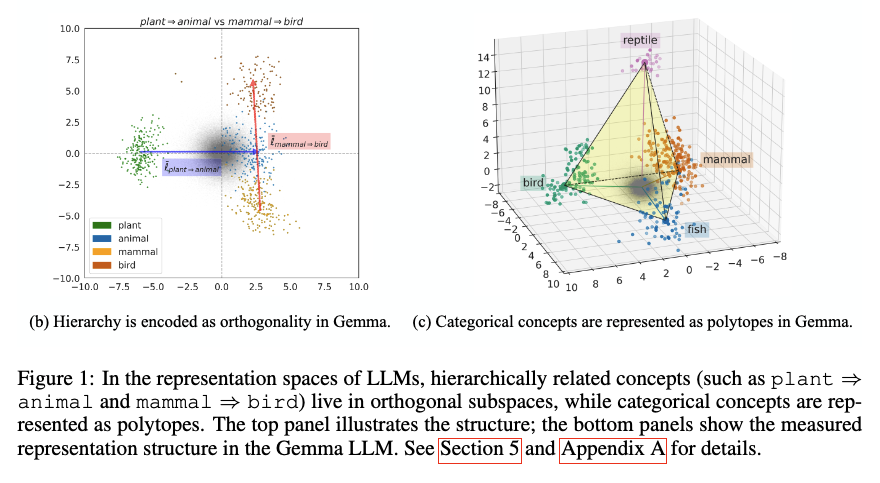
Fig 1. Park et al. (2024) Fig 1 (measurement results on Gemma). (b) Hierarchical relations appear as orthogonality (scatter plot of the plant → animal axis and the mammal → bird axis). (c) Category concepts appear as polytopes (the value vectors of mammal, bird, reptile, fish form simplex-like vertices). Source: Park, K., Choe, Y. J., Jiang, Y., & Veitch, V. (2024). The Geometry of Categorical and Hierarchical Concepts in Large Language Models. ICLR 2025.
The paper verifies this claim with three kinds of experiments.
- Experiment 1: Binary feature evaluation — Confirm that "the category direction certainly exists," in the form that the "category direction" estimated on train tokens aligns even on unseen test tokens and separates from unrelated random tokens.
- Experiment 2: Shortest path × cosine heatmap — Look across the correspondence between shortest distance on WordNet and cosine between nodes as a heatmap, showing that the hierarchical structure and the representation geometry are correlated.
- Experiment 3: Cosine of hierarchical orthogonality — Compute the cosine of the parent direction and the "parent → child difference direction," quantitatively measuring hierarchical orthogonality itself. Park, being aware of the triviality that "in high dimensions, even unrelated vectors have cosines near 0," prepares 3 kinds of controls (described below) to try to separate things.
What Happened in Our Reproduction Experiment
Setup
We used 4 models in the experiment.
| model key | Hugging Face model | role |
|---|---|---|
gemma2b |
google/gemma-2b |
English model with strong correspondence to Park/Golechha |
llama3_8b |
meta-llama/Meta-Llama-3-8B |
Correspondence with Park Appendix F |
qwen35_2b |
Qwen/Qwen3.5-2B-Base |
Verification on a different-series model |
llmjp4_8b |
llm-jp/llm-jp-4-8b-base |
Extension to Japanese |
How WordNet lemmas are mapped to model vocabulary differs by tokenizer. For Gemma and LLaMA, we used Park's official tokenizer-specific WordNet mapping as is; for Qwen, we used Gemma's token strings re-filtered with the Qwen tokenizer. For LLM-jp, we originally created a Japanese WordNet mapping for this experiment by assigning Japanese lemmas from Open Multilingual WordNet.
Experiment 1: Binary Feature Evaluation
For each WordNet node w, we split tokens belonging to it into train / test, and compute the projection of each token onto the category direction ℓ̄_w estimated on train. Park's theoretical prediction is clear — if y belongs to the category, the projection is close to 1; if not, close to 0.
The figures obtained in this experiment are as follows. In each figure, the left panel shows the original unembedding (as trained), and the right panel shows the unembedding after shuffling (a control that row-shuffles the unembedding matrix). Each color means: train (green), test (blue), random (orange); the bold line is the mean and the error bar is the standard deviation.
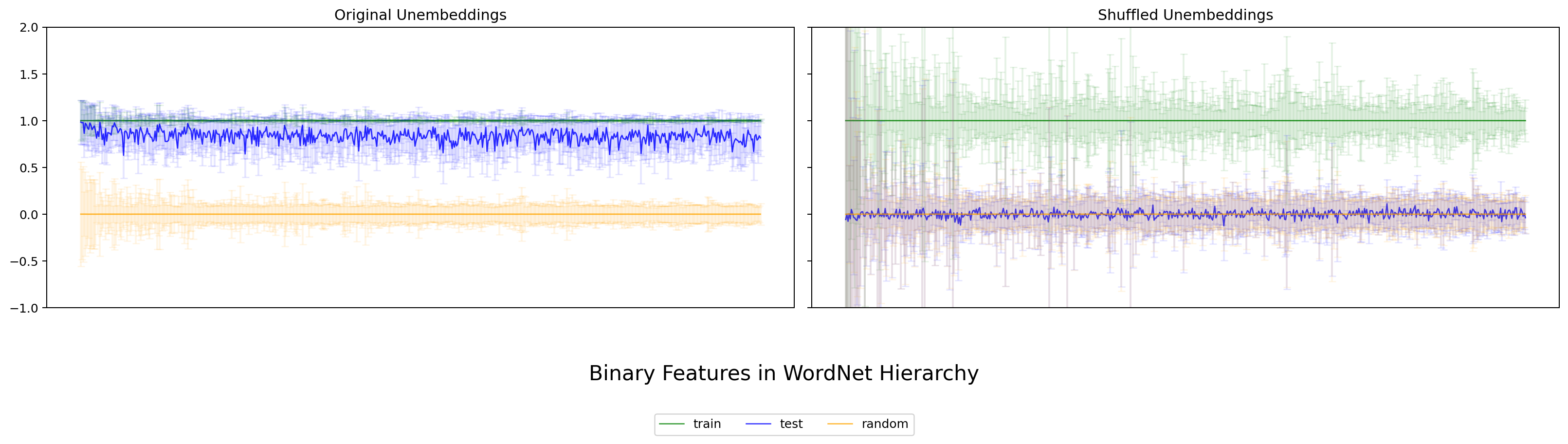
Fig 2. Binary feature evaluation on Gemma-2B WordNet. Source: This reproduction experiment.
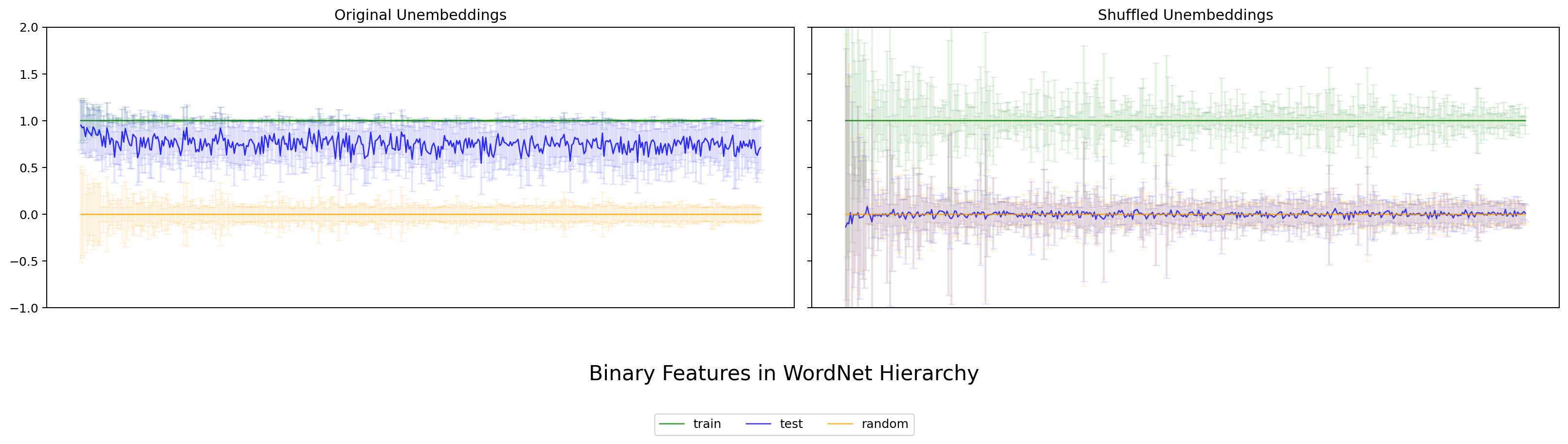
Fig 3. Binary feature evaluation on LLaMA-3-8B WordNet. Source: This reproduction experiment.
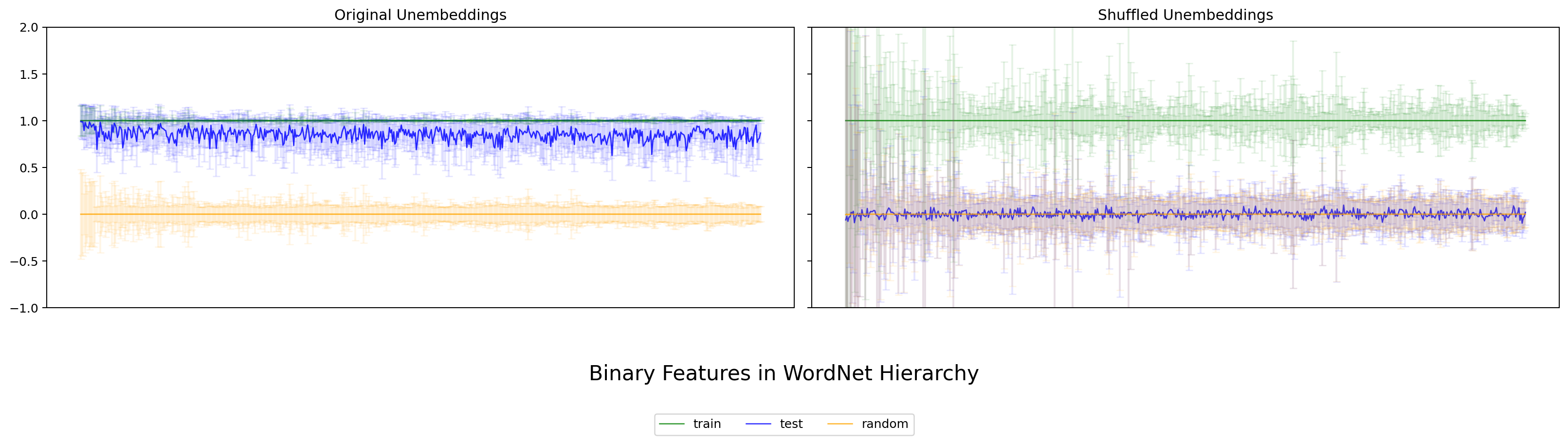
Fig 4. Binary feature evaluation on Qwen3.5-2B WordNet. Source: This reproduction experiment.
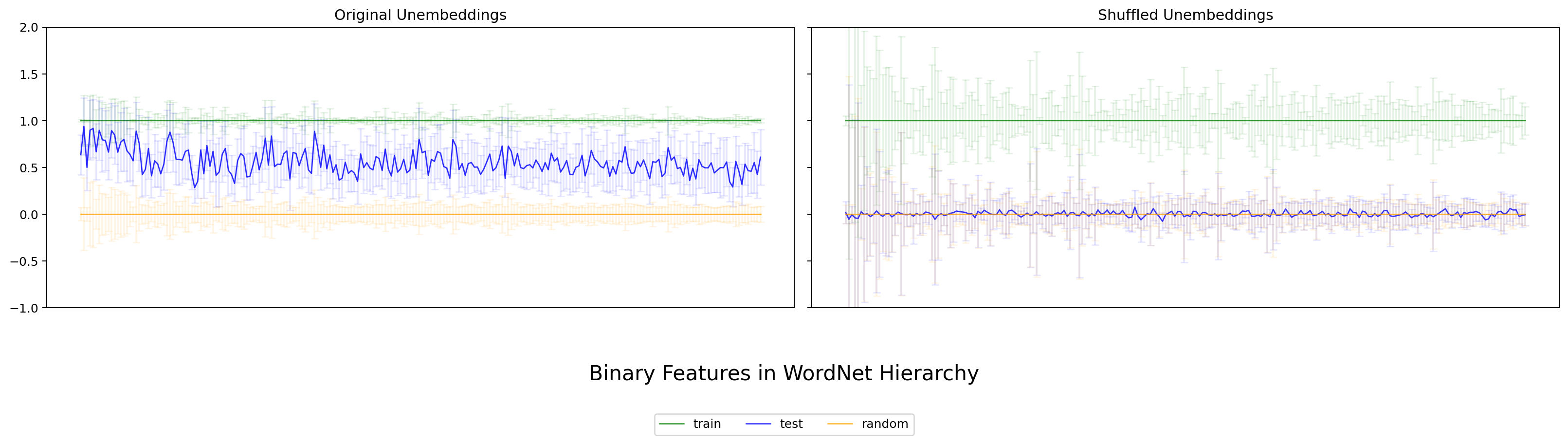
Fig 5. Binary feature evaluation on LLM-jp Japanese WordNet (uses the Japanese WordNet mapping originally created in this experiment). Source: This reproduction experiment.
In all 4 models, Park's observation that — on the original, train (green) and test (blue) overlap near 1 and random (orange) falls near 0 — could be reproduced. Not just for the English models Gemma / LLaMA / Qwen, but the fact that the same tendency is seen even on the Japanese LLM-jp suggests that Park's claims do not depend strongly on language. On the other hand, on the post-shuffle side, train/test/random all collapse into a uniform distribution near 0, losing meaning as a category direction.
Experiment 2: Shortest Path Similarity and Cosine Heatmaps
For each pair of nodes on WordNet, we compute the similarity based on shortest path distance and the cosine similarity between the vectors ℓ̄_w themselves, and lay them out side by side as heatmaps. Park's theoretical prediction is that "the center (cosine original) resembles the left (shortest distance)."
The heatmaps for the 4 models in this experiment are shown below. For each figure, the left is WordNet shortest distance (1+dist)⁻¹, the center is cosine (original), and the right is cosine (post-shuffle).
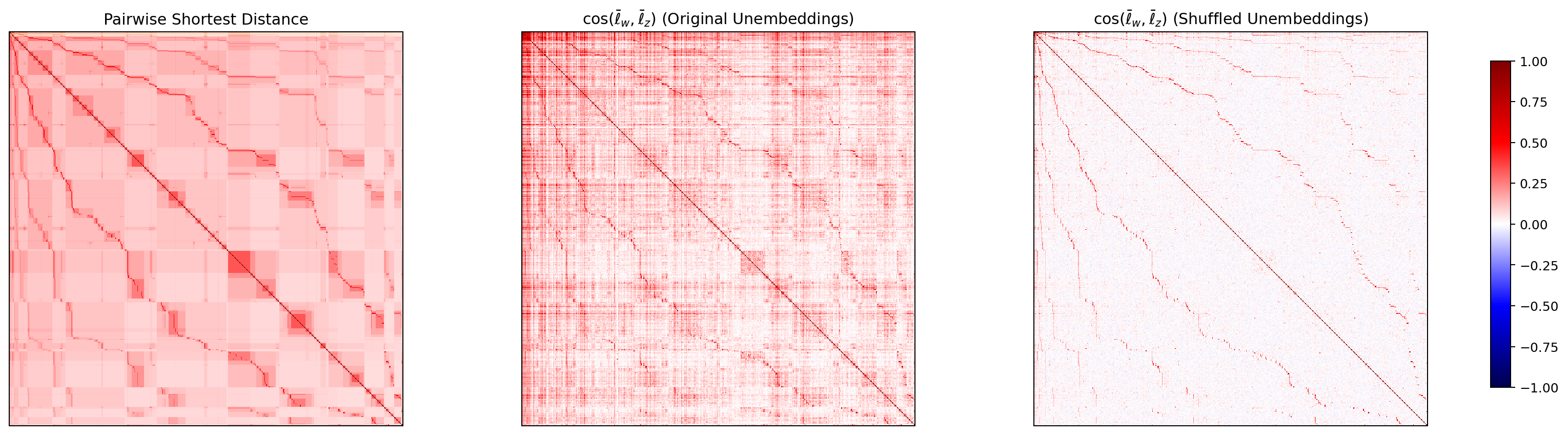
Fig 6. Shortest path similarity and node-direction cosine heatmap on Gemma-2B WordNet. Source: This reproduction experiment.
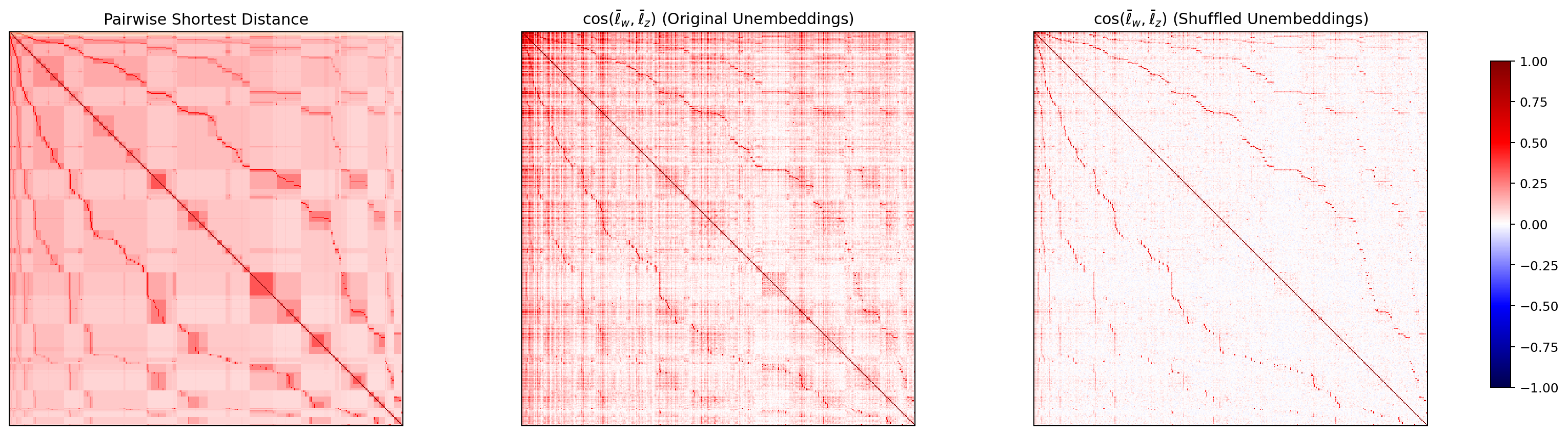
Fig 7. Shortest path similarity and node-direction cosine heatmap on LLaMA-3-8B WordNet. Source: This reproduction experiment.
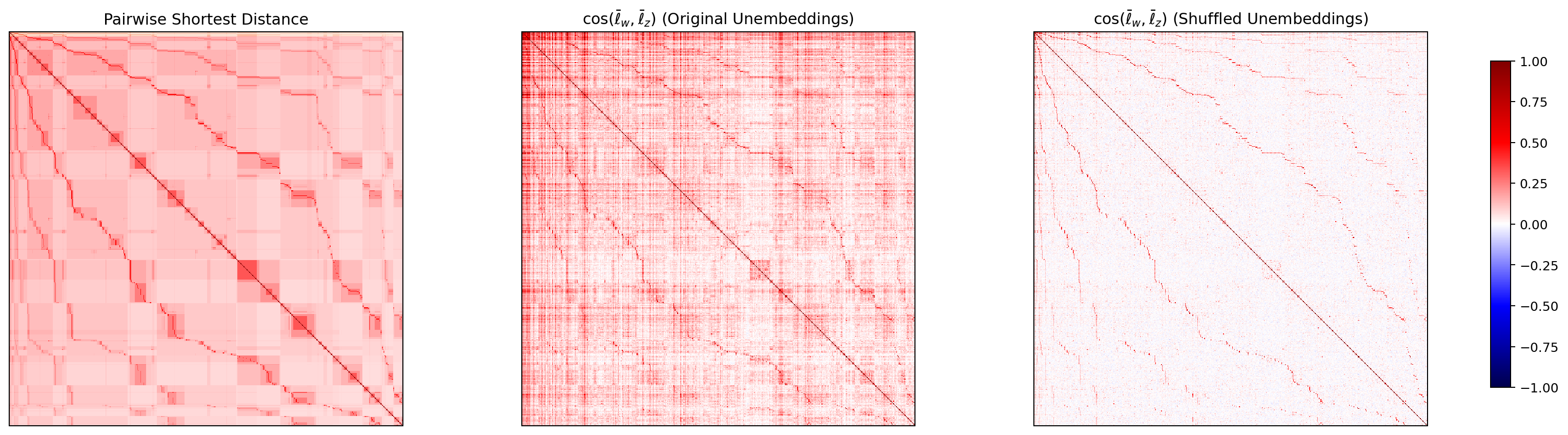
Fig 8. Shortest path similarity and node-direction cosine heatmap on Qwen3.5-2B WordNet. Source: This reproduction experiment.
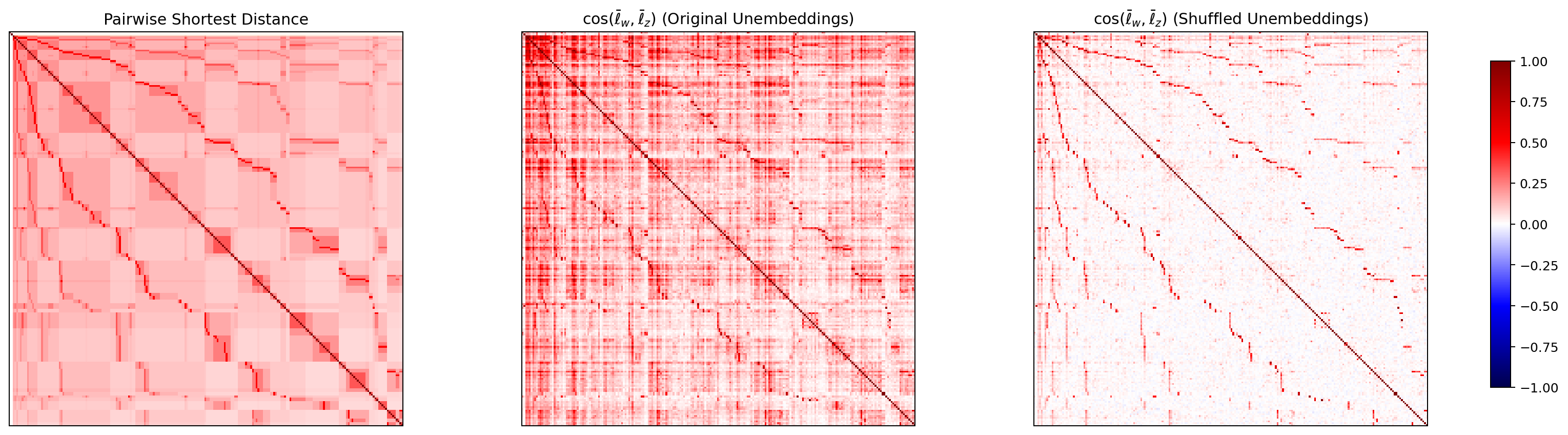
Fig 9. Shortest path similarity and node-direction cosine heatmap on LLM-jp Japanese WordNet. Source: This reproduction experiment.
In all 4 models, the left (shortest distance) and the center (cosine original) show a common block structure, and in the right (post-shuffle) the pattern has disappeared. We can read this as: Park's claim of "a correspondence between hierarchical structure and directional structure" is confirmed in both English and Japanese models.
Experiment 3: Cosine of Hierarchical Orthogonality
This is the central metric of this chapter. For each WordNet node, we compute the cosine of the parent direction and the "parent → child difference direction" (Thm 8(a)), and plot them across all binary features. The closer the value to 0, the more Park's claimed hierarchical orthogonality holds.
Park is aware of an important point — "in high-dimensional space, even random vectors tend to have cosines close to 0" (Golechha later discusses this point in more theoretical detail). For that reason, to separate whether the observed near-zero cosine is a trivial consequence of high dimensionality or a property intrinsic to semantic structure, Park prepares 3 kinds of controls.
- Random Parent: Replace the parent concept with an unrelated synset.
- Post-shuffle unembedding: Row-shuffle the unembedding.
- 70% independent subsamples: By independently picking 70% of the tokens at each synset, deliberately break the set-inclusion relationship. This is positioned as the decisive control.
First, we present the results for hier_ortho_b (cosine of parent direction and parent-to-child difference direction) for 4 models. In each figure, the left panel is the Whole set and the right panel is the Training set (corresponding to Park Fig 5's 70% subsamples). The horizontal axis is binary features on the WordNet hierarchy, the vertical axis is cosine, blue is original, green is post-shuffle, and orange is Random Parent.
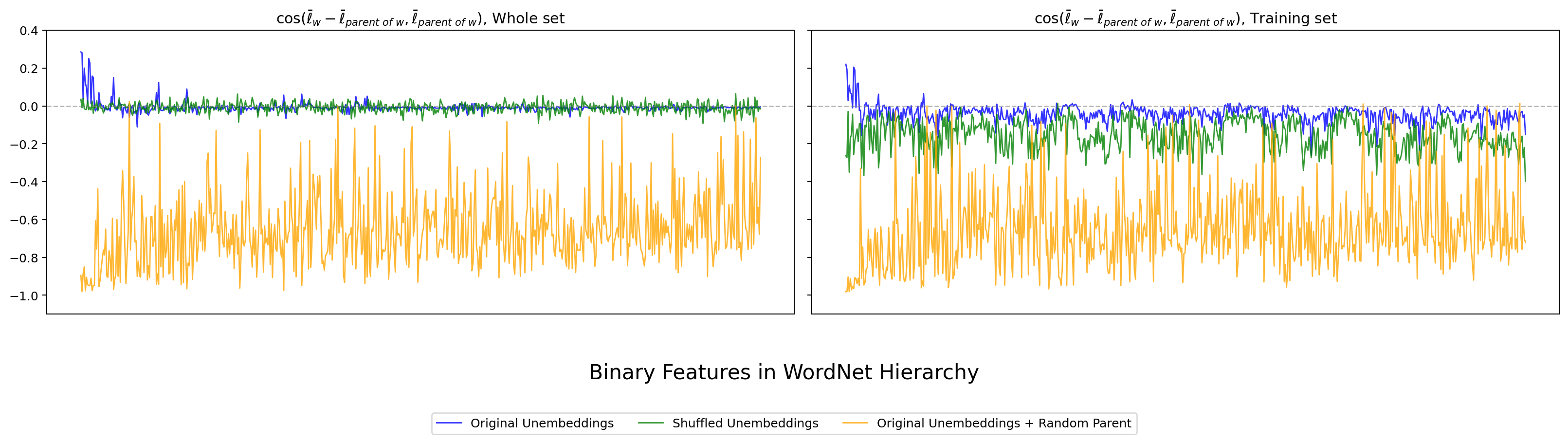
Fig 10. Park-compatible hier_ortho_b on Gemma-2B WordNet. Blue is original, green is post-shuffle, orange is Random Parent. Source: This reproduction experiment.
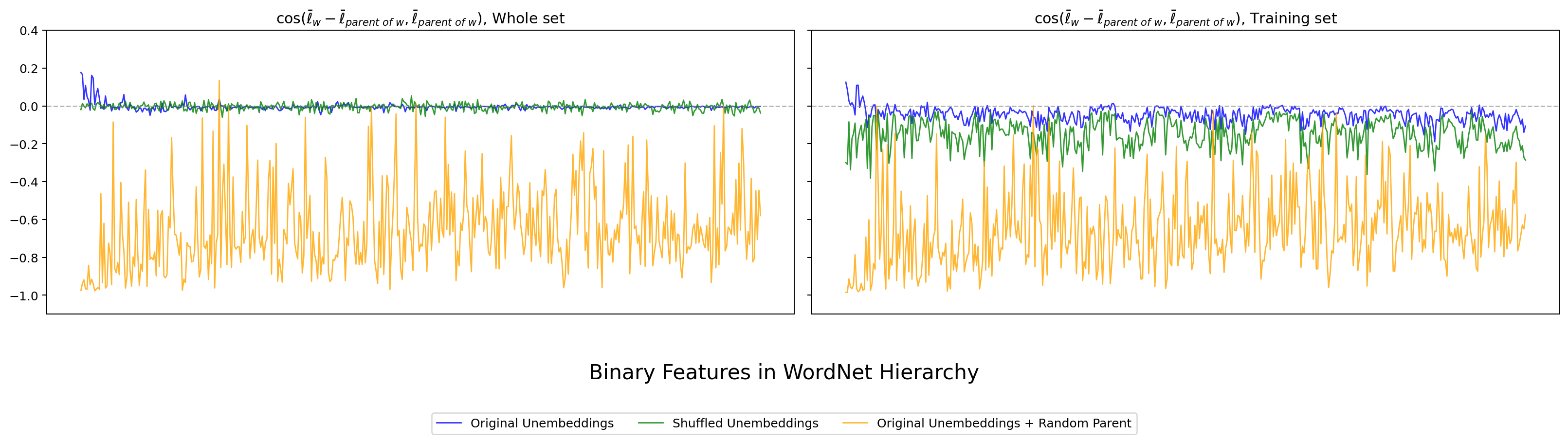
Fig 11. hier_ortho_b on LLaMA-3-8B WordNet. Source: This reproduction experiment.
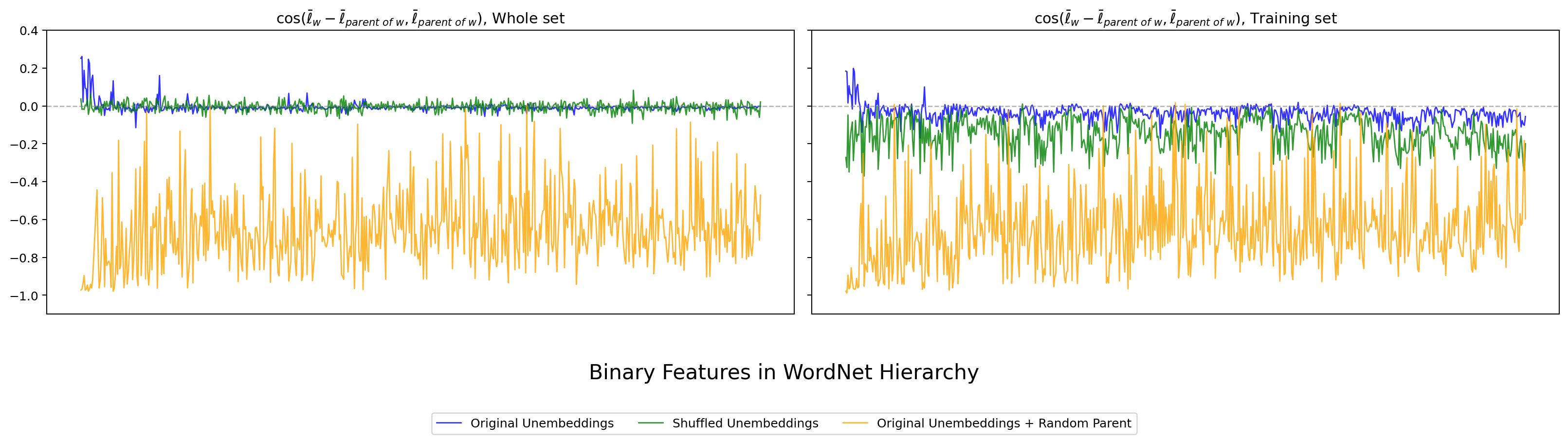
Fig 12. hier_ortho_b on Qwen3.5-2B WordNet. Source: This reproduction experiment.
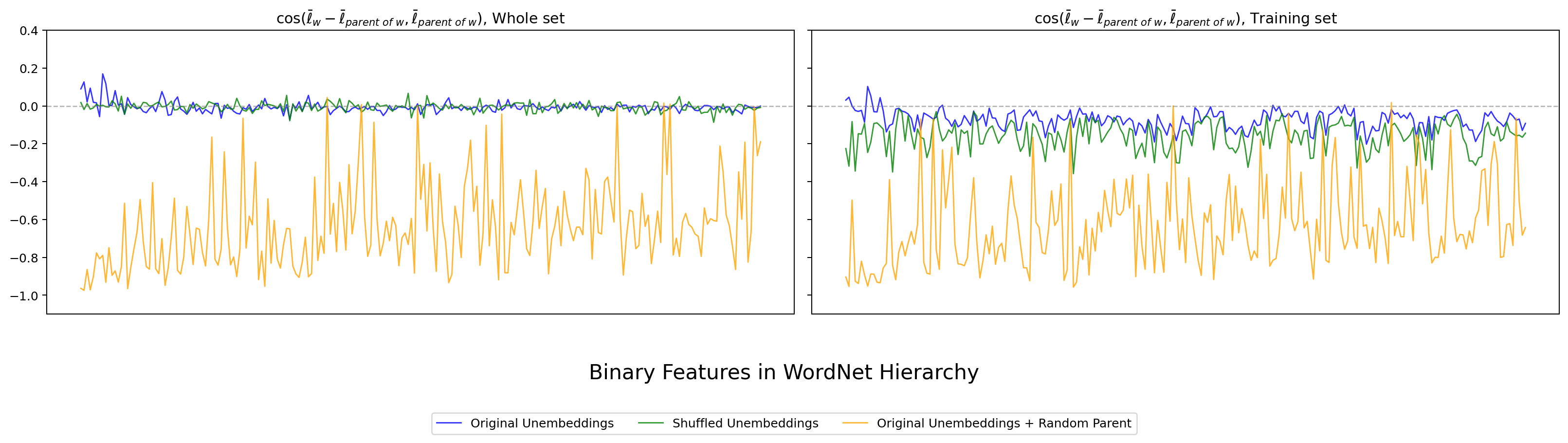
Fig 13. hier_ortho_b on LLM-jp Japanese WordNet. Source: This reproduction experiment.
In all 4 models, Park's observation — the cosine of original (blue) concentrates around 0, while Random Parent (orange) swings largely negative — could be reproduced. The same form appears even on the Japanese LLM-jp. The fact that the Whole set panel and the Training set panel show almost the same tendency is also consistent with Park's Fig 5.
On the other hand, the post-shuffle (green) sticks near 0 in the left panel (Whole set) to a degree that is hard to distinguish from the original, and the caution Park himself acknowledged that "near-zero comes out even after shuffling" can be observed as is. This becomes a foreshadowing for Chapter 4: this alone does not become decisive evidence for Park's claim.
Next is hier_ortho_e, which looks at the cosine including not only parents and children but also grandparent concepts.
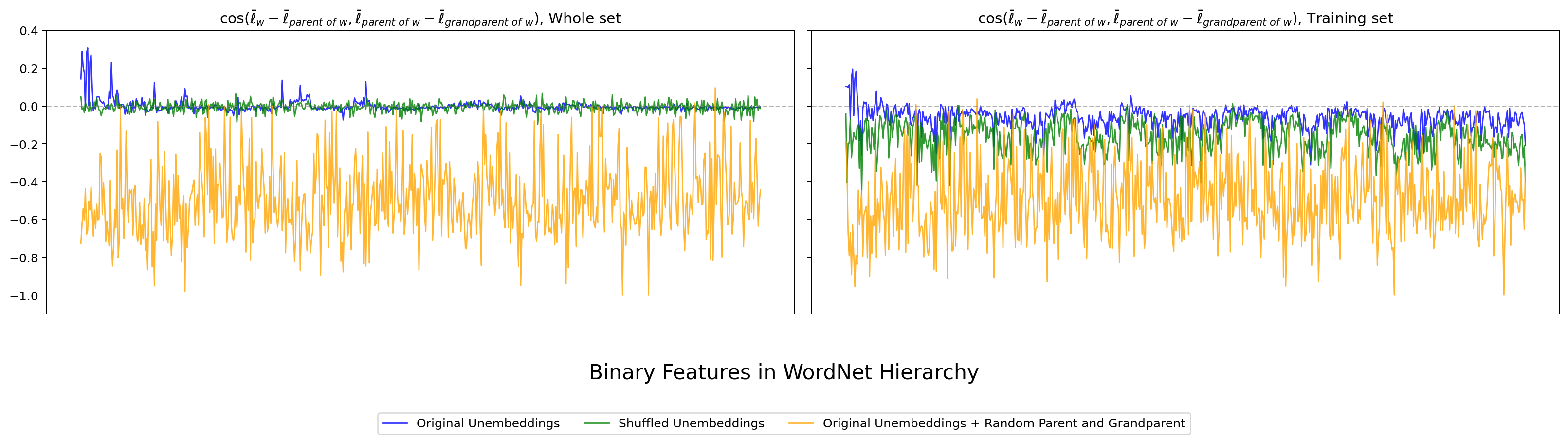
Fig 14. hier_ortho_e on Gemma-2B WordNet (the extended version including grandparent concepts). Source: This reproduction experiment.
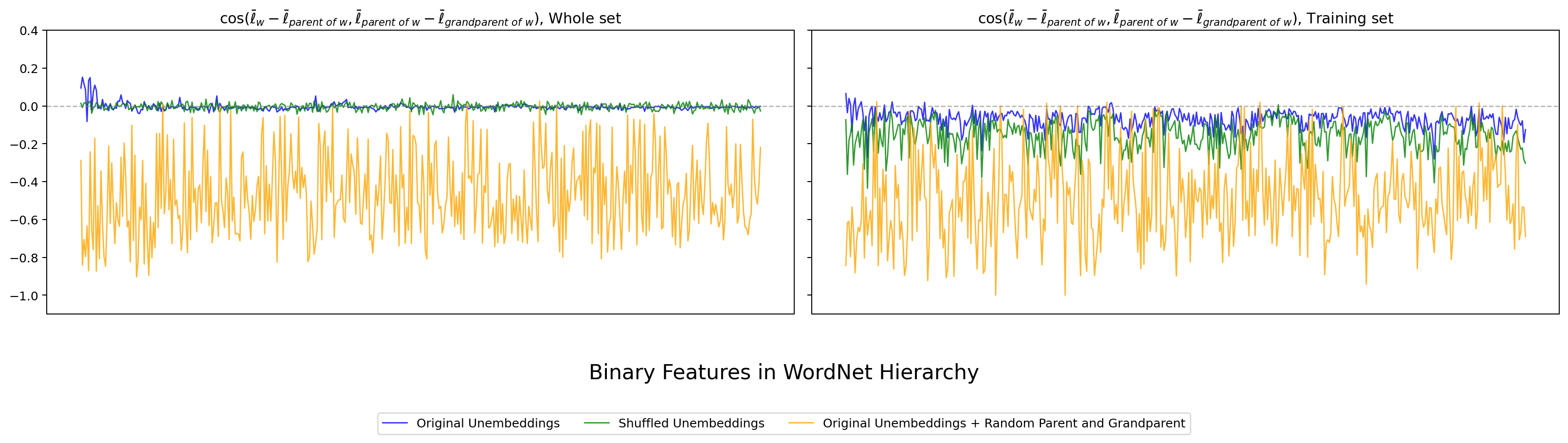
Fig 15. hier_ortho_e on LLaMA-3-8B WordNet. Source: This reproduction experiment.
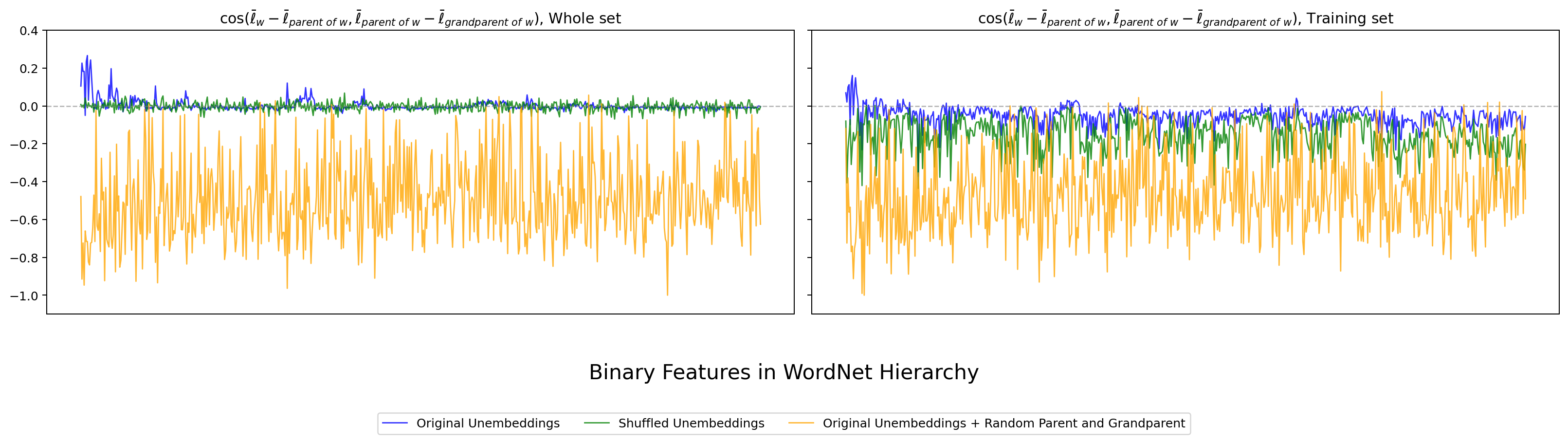
Fig 16. hier_ortho_e on Qwen3.5-2B WordNet. Source: This reproduction experiment.
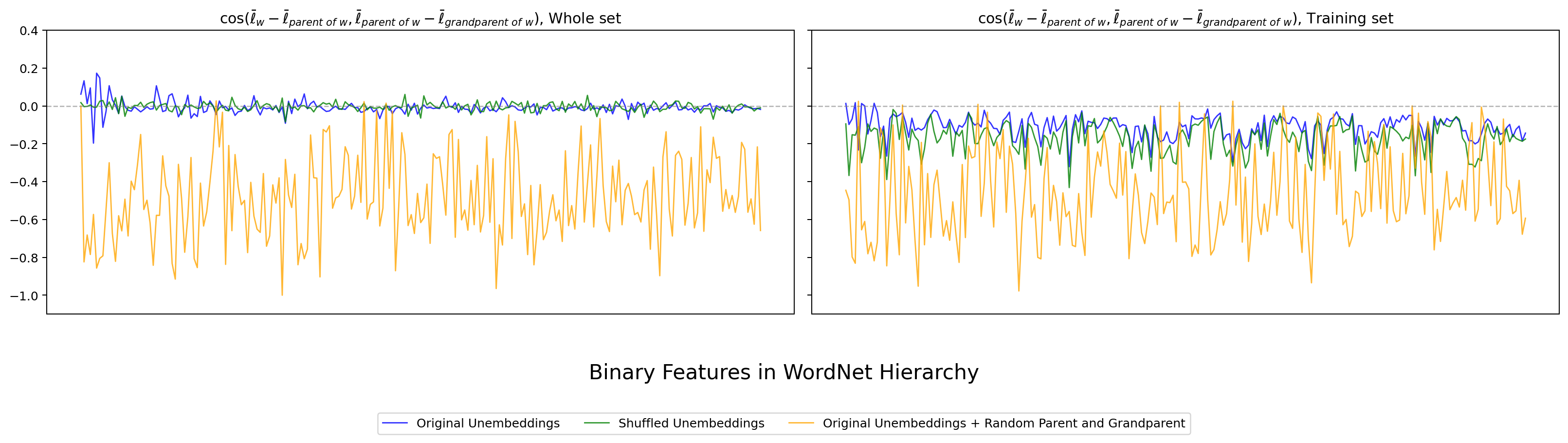
Fig 17. hier_ortho_e on LLM-jp Japanese WordNet. Source: This reproduction experiment.
The same tendency as hier_ortho_b is maintained even when extended to grandparent concepts. We can say that two-step hierarchical orthogonality is also stably observed in all 4 models.
Discussion
Looking at both the figures and the numbers, the WordNet node-level geometry that Park focused on could be observed fairly consistently in this experiment's 4 models. The fact that the same tendency could be reproduced even in the new combination of Japanese WordNet × LLM-jp is something we would like to record as a small contribution of this experiment.
However, we need to pause here once. There is a well-known property that in high-dimensional space, cosines between mutually unrelated vectors tend to approach 0. Concluding "semantic hierarchy is being represented" solely from the fact that "it is close to 0" goes a bit too far logically. That is exactly the heart of Golechha's problem statement, introduced next.
Chapter 4. The Golechha Blog and Our Reproduction Experiment
What the Golechha Blog Claims
The Main Claims
Golechha et al. (2025)'s central claim, in one sentence, is this.
Park's orthogonality and polytope results are a trivial consequence of the whitening transformation and the geometric properties of high dimensions, and cannot be called evidence intrinsic to semantic hierarchy.
The heart of their question is: "Are Park's figures really looking at semantic hierarchy?" "Couldn't the same kind of figure be drawn with semantically nonsensical data?"
Grounds — 3 Ablation Experiments
Golechha used Park's official code as is and redrew Park's figures by swapping only the input data.
- Ablation E1 (emotions): Even with emotion categories (joy, sadness, anger, fear, surprise, disgust) that do not have natural hierarchy, Park-style polytope figures and near-zero cosines are obtained. As Golechha says, "joy and sadness are semantically opposite, yet under their transformation they appear to be 'orthogonal'."
- Ablation E2 (nonsense): Even with a set of random object names with no semantic connection (toaster, penguin, cactus, ...), the same look is obtained.
- Ablation E3 (random unembedding): Even when the unembedding matrix is replaced with an untrained Gaussian, going through whitening produces near-zero cosines and simplex-like structure. Park-style figures can be drawn even from an unlearned random output layer.
Grounds — Theoretical Argument
Golechha also deploys, alongside the ablations, a theoretical argument for why this happens. The point is that the relationship between the number of category tokens n and the model dimension d is discussed by separating into 2 cases.
- Case d ≥ k: The whitening transformation can strictly orthogonalize the concept vectors. The equation of Theorem 8 holds even for an "arbitrarily constructed concept hierarchy."
- Case d < k: In high-dimensional space, the cosines between random vectors have the measure-concentration property of concentrating at "mean 0, spread ≈ 1/√d." For Gemma-2B, d = 2048, so 1/√d ≈ 0.022. "Near-zero cosines between unrelated vectors" hold probabilistically almost always.
Reservations
However, there are two points to be careful of.
The first is that Golechha himself does not deny Park's result on animals itself. His claim is that "Park's verification method cannot discriminate the presence or absence of semantic structure (non-diagnostic)," and he does not say that Park's animals result is wrong.
The second is that the blog article does not present quantitative measures such as mean cos, confidence intervals, or statistical tests. It stays at the visual claim of "they look the same." Furthermore, the result of running Park paper §5.2's 70% independent subsample diagnostic (the B4 mentioned above) on nonsense / random unembedding is also not seen within the blog.
These become the starting point of the original parts of this experiment.
What Happened in Our Reproduction Experiment
Originality and Aim
- Quantifying Park's 70% independent subsample diagnostic across 4 models: Park stops at a Gemma-2B-only visual presentation as Fig 5, but in this experiment we incorporated it as
B4(subsample alone) andB5(subsample + shuffle) within the 6 kinds of ablations, into a form where Golechha's 3 conditions and Park's additional diagnostic can be read side by side in the same framework. - Comparison with confidence intervals over 4 models × 30 seeds: Both Park and Golechha are single runs, but in this experiment we take the mean and 95% confidence interval over 30 seeds, into a form where we can separate whether observed values are by chance or substantial.
- Confirming language-independence by Japanese extension: Using LLM-jp and Japanese WordNet, we confirm how Park's claims look in languages other than English.
Setup
In this experiment, for each of the 4 models, we ran the 3 datasets animals, emotions, nonsense. To verify Park's claims from multiple sides further, we compare 6 kinds of ablations.
| Condition | Content | What we want to confirm / Expectation |
|---|---|---|
B1 |
original unembedding (no processing) | Reference condition. If Park's claim is right, cosines are near 0. |
B2 |
random parent (randomly re-pick parent concept) | If the parent is randomized, orthogonality should break. Gives a "destruction baseline." |
B3 |
post-shuffle unembedding | According to Park's claim, it should depart from 0, but in high dimensions there is the possibility it does not break. |
B4 |
70% independent subsample | Park's proposed independent subsample diagnostic. If semantic hierarchy is causally represented, the result should be preserved. |
B5 |
shuffle + 70% independent subsample | From the difference with B4 alone, "structure that breaks under shuffle" emerges. |
C5 |
Gaussian random unembedding | According to Park's claim, it should depart from 0, but if it comes out near 0, it supports Golechha's claim. |
Among these, B4 corresponds to the independent subsample diagnostic Park mentioned in the paper, and B5 corresponds to combining shuffle with it. The difference between B4 and B5 is what this experiment systematically quantifies for the first time. The seeds range from 0 to 29, and the results are aggregated in repro/results/summary.csv.
Visualizations
The Golechha blog's main point was that "Park-style projection and polytope figures appear even on categories other than animals, or with random unembeddings." In this experiment too, we generate visualizations corresponding to this.
Here, we lay out all 6 conditions on the original part of this experiment — the Japanese model LLM-jp-4-8B × animals dataset. For each condition, the left is a 2D projection and the right is a 3D simplex-polytope. Comparing B1 and C5 makes Golechha's claim clear, and from the comparison of B2〜B5 we can see to what degree Park's additional diagnostic can discriminate.
B1: original unembedding. The unprocessed reference condition.
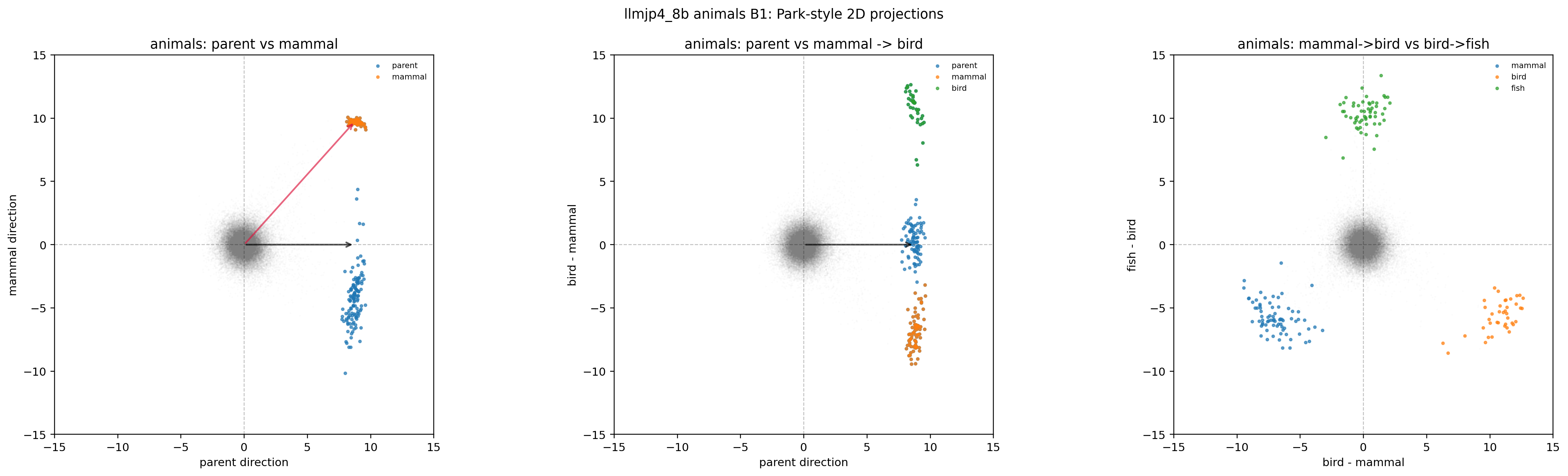
Fig 18. LLM-jp animals × B1 (Park-style 2D projection). As expected, the differences along the parent axis (black arrow) appear cleanly. Source: This reproduction experiment.
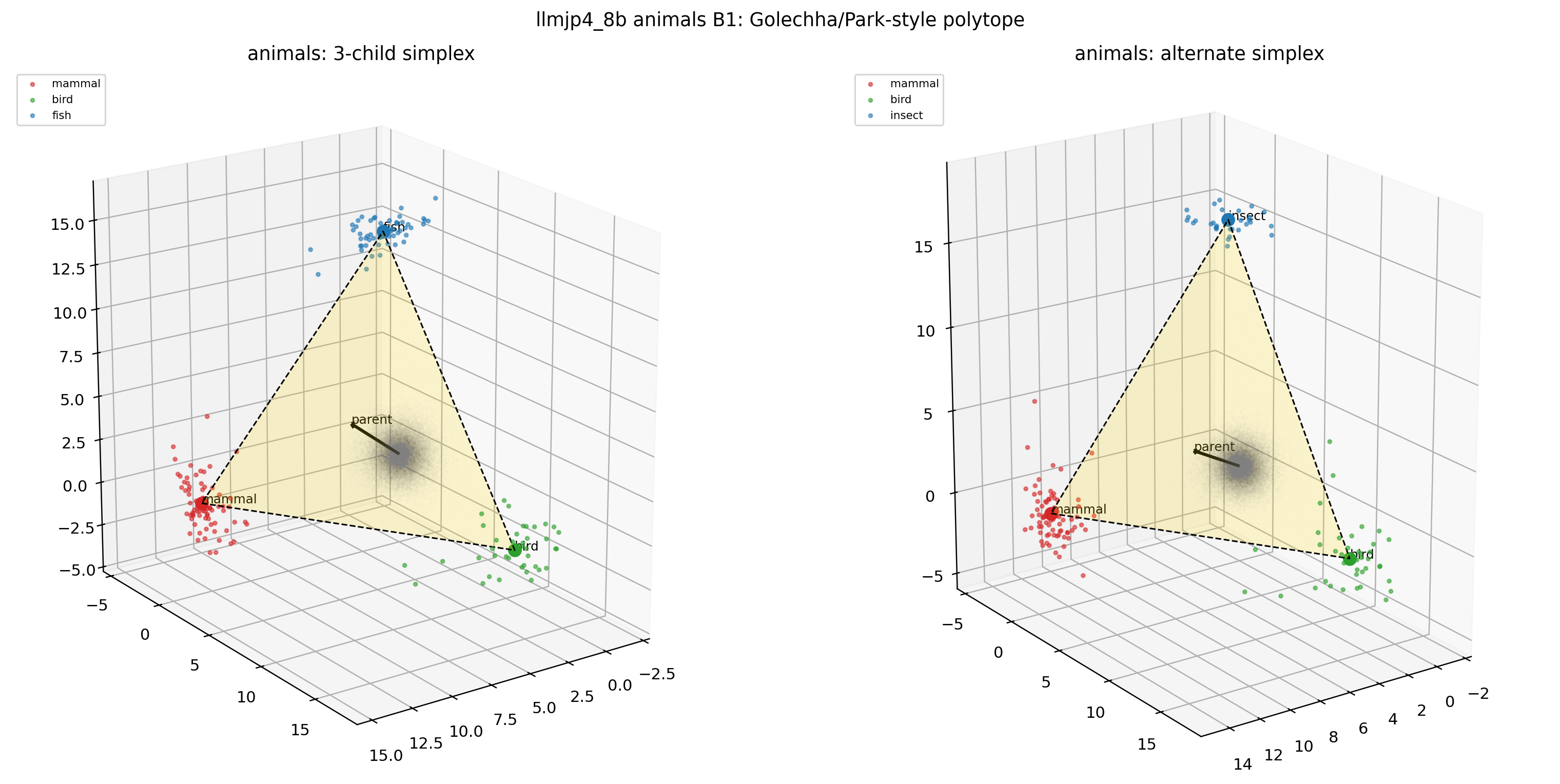
Fig 19. LLM-jp animals × B1 (3D simplex-polytope). The three category value vectors form simplex-like vertices. Source: This reproduction experiment.
For reference, we also lay out B1 for emotions and nonsense. Even for emotion categories without natural hierarchy, or for nonsense categories, the look is similar to animals.
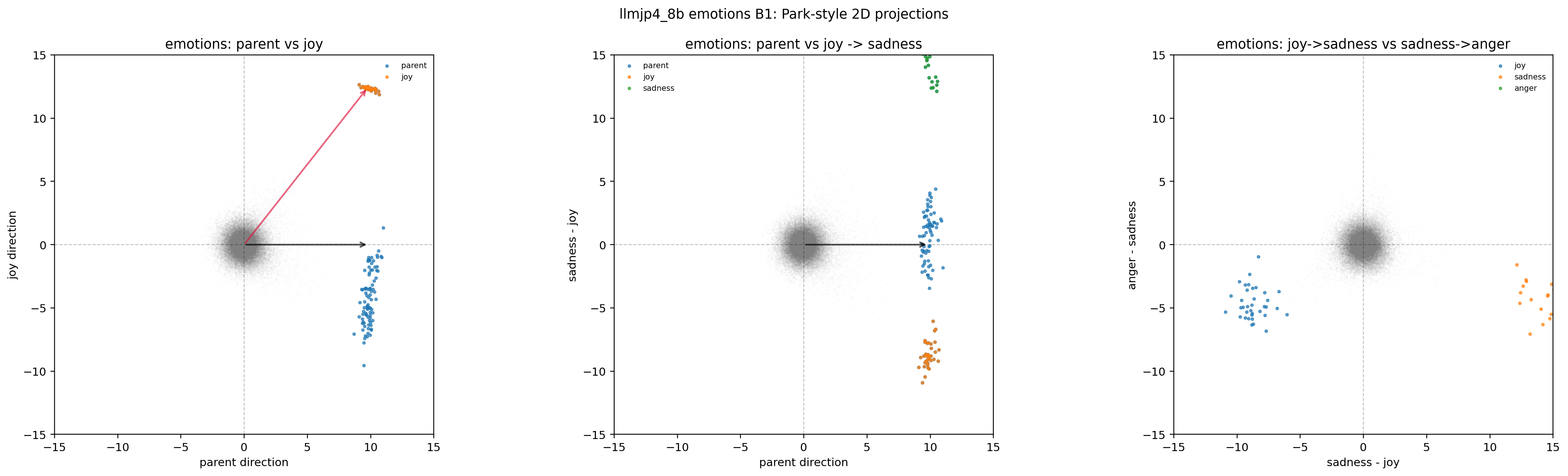
Fig 20. LLM-jp emotions × B1 (2D projection). Even for emotion categories without natural hierarchy, the look is similar to animals. Source: This reproduction experiment.
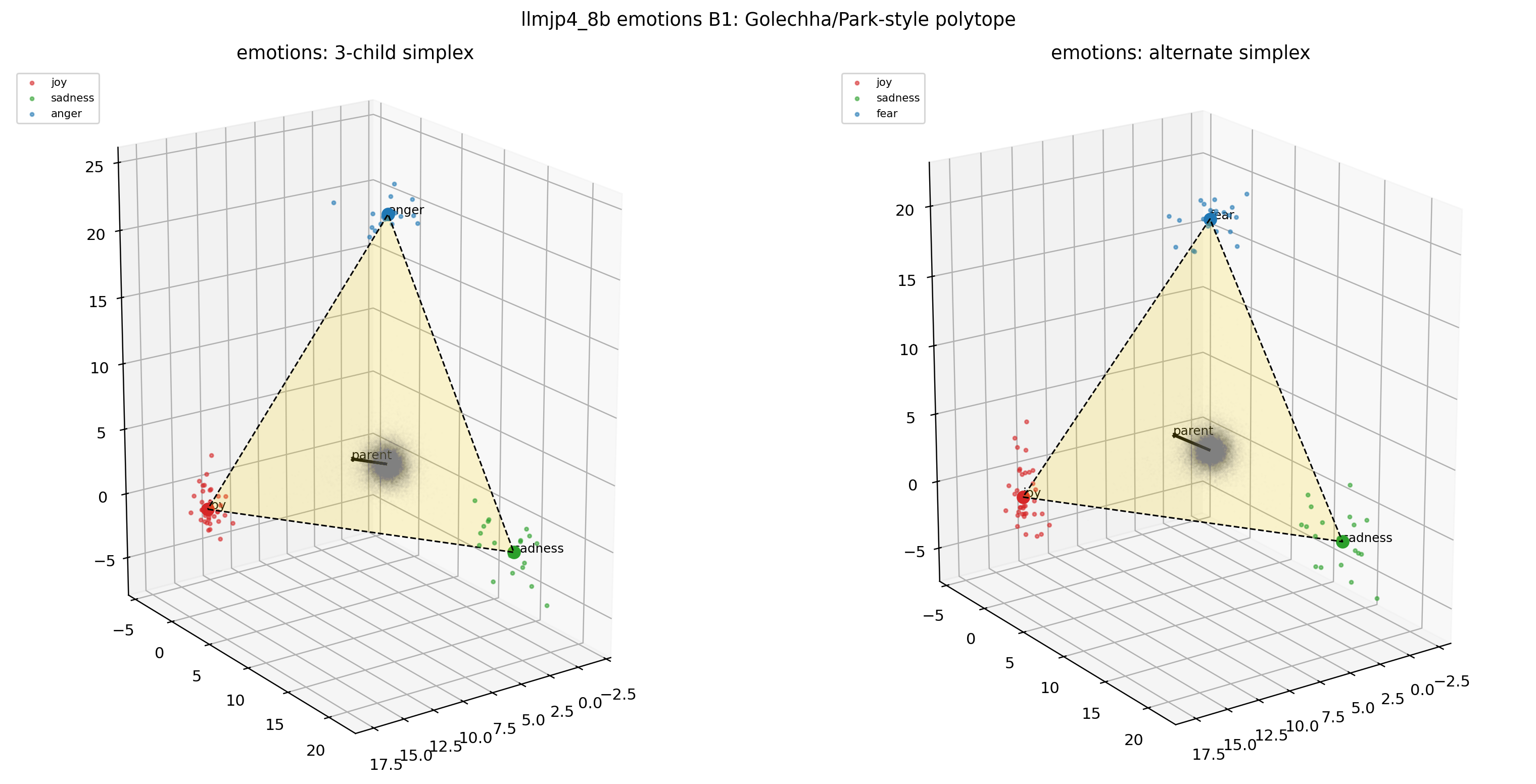
Fig 21. LLM-jp emotions × B1 (3D simplex-polytope). Source: This reproduction experiment.
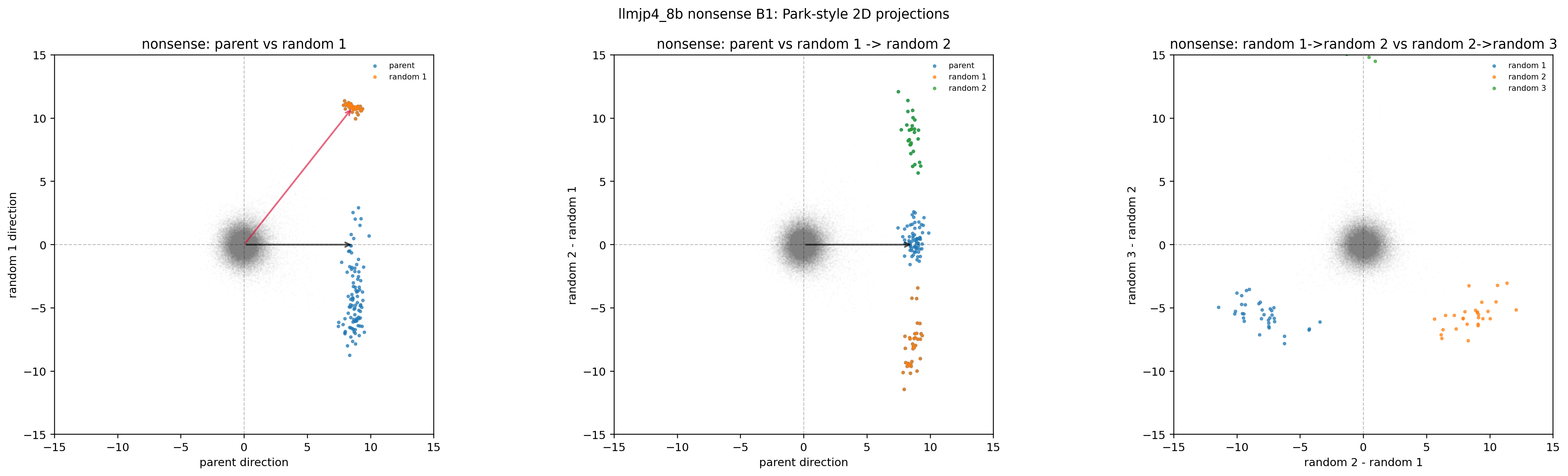
Fig 22. LLM-jp nonsense × B1 (2D projection). Even for nonsense categories, the shape comes out similar. Source: This reproduction experiment.
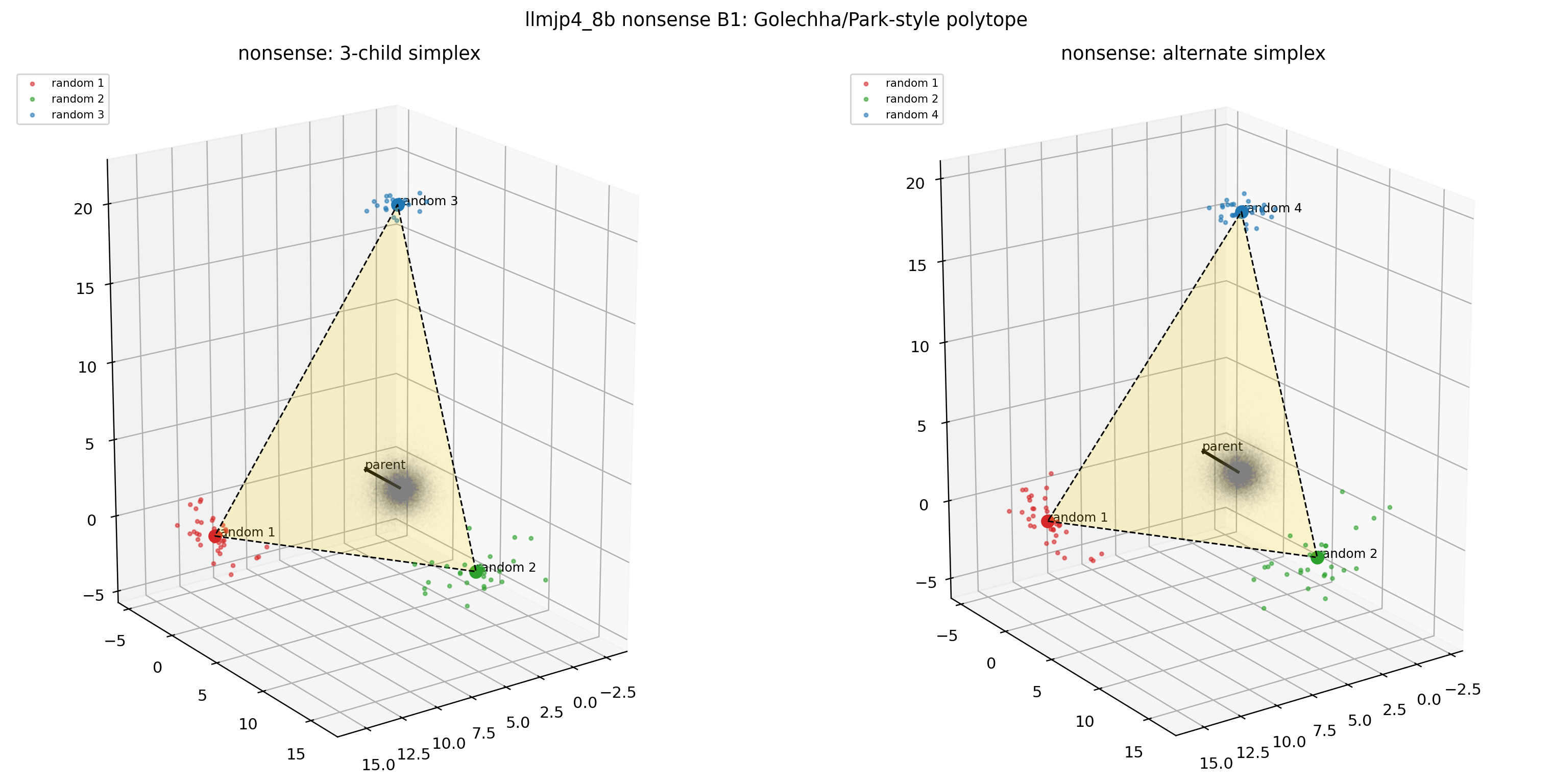
Fig 23. LLM-jp nonsense × B1 (3D simplex-polytope). Source: This reproduction experiment.
B2: random parent. A condition replacing the parent concept with an unrelated synset. According to Park's claim, the polytope should largely collapse — this gives a baseline for "the broken figure."
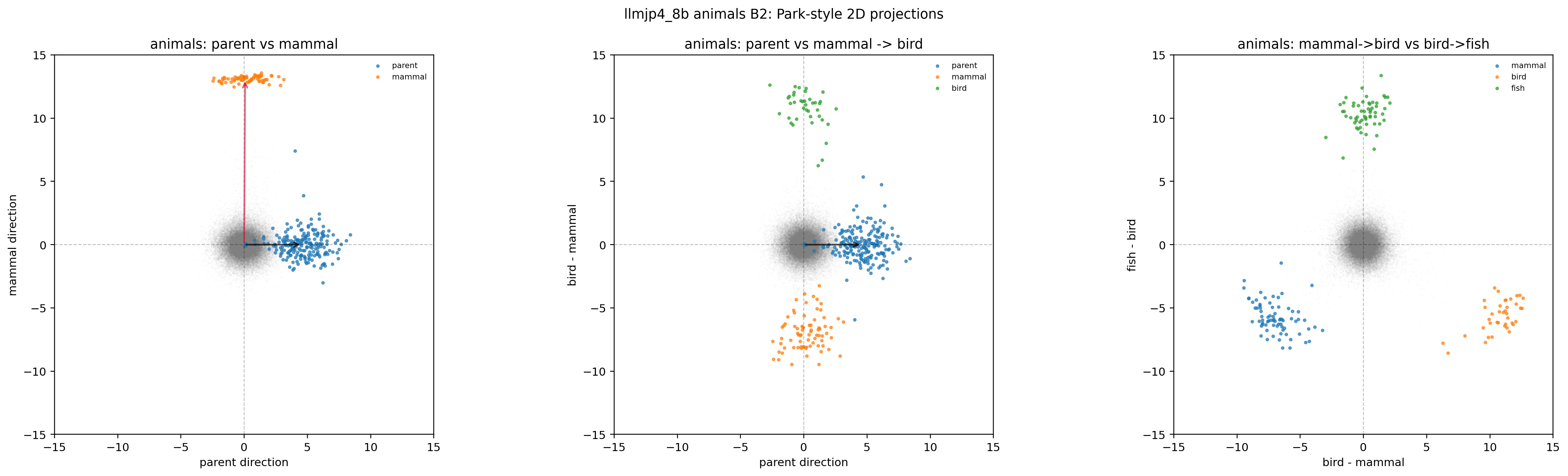
Fig 24. LLM-jp animals × B2 (random parent) 2D projection. As expected, the parent vector is off the original direction. Source: This reproduction experiment.
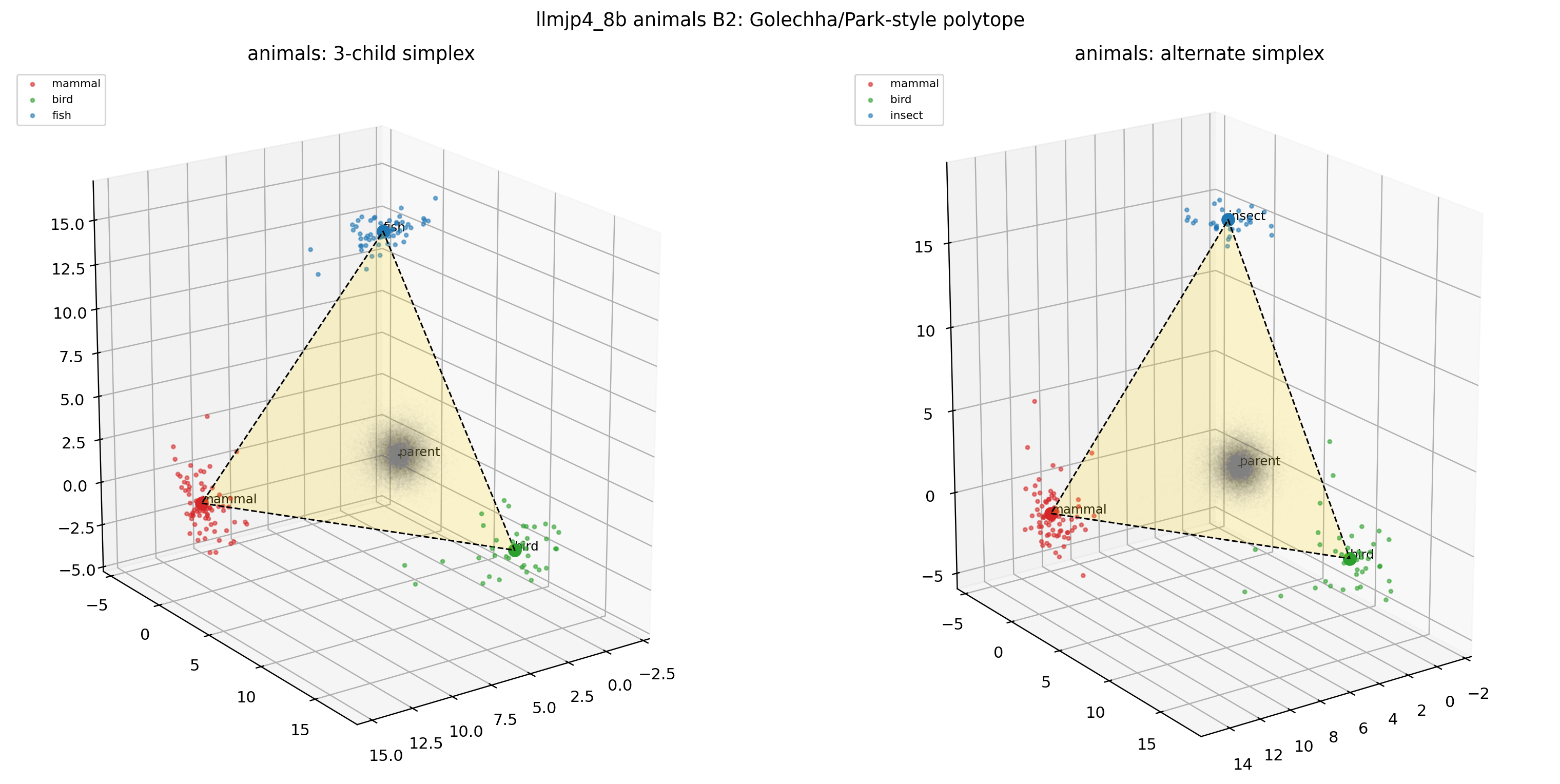
Fig 25. LLM-jp animals × B2 (random parent) 3D polytope. The vertex arrangement has collapsed. Source: This reproduction experiment.
B3: post-shuffle unembedding. Row-shuffle the unembedding matrix. As Golechha points out, in high dimensions the simplex shape does not collapse as much as one would expect, and confirm that it is hard to distinguish from B1.
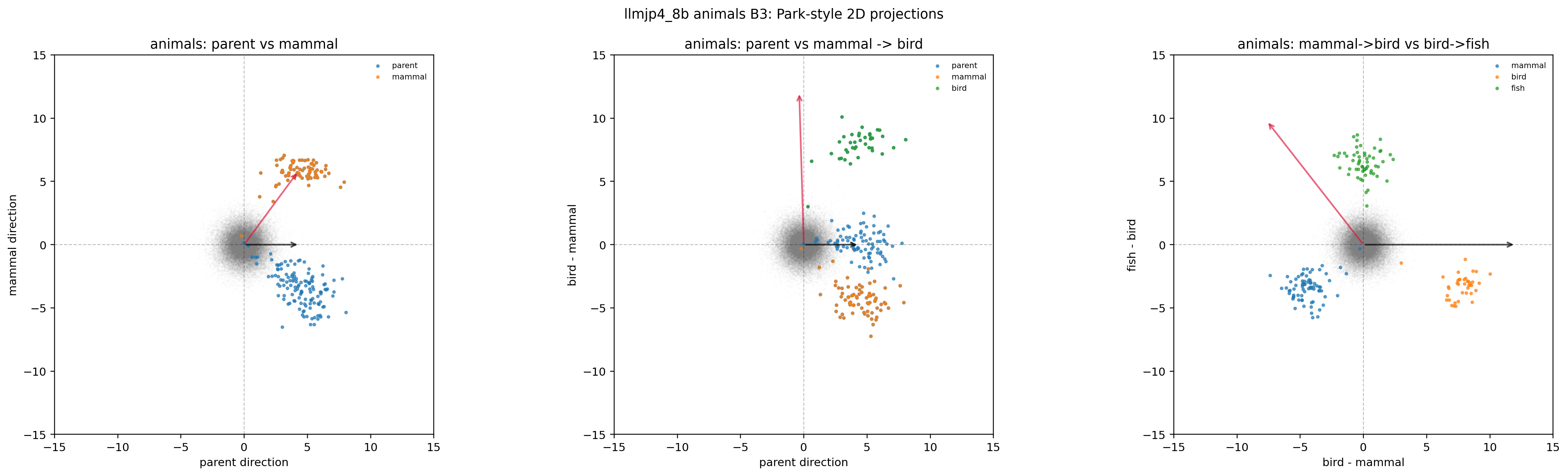
Fig 26. LLM-jp animals × B3 (post-shuffle unembedding) 2D projection. Source: This reproduction experiment.
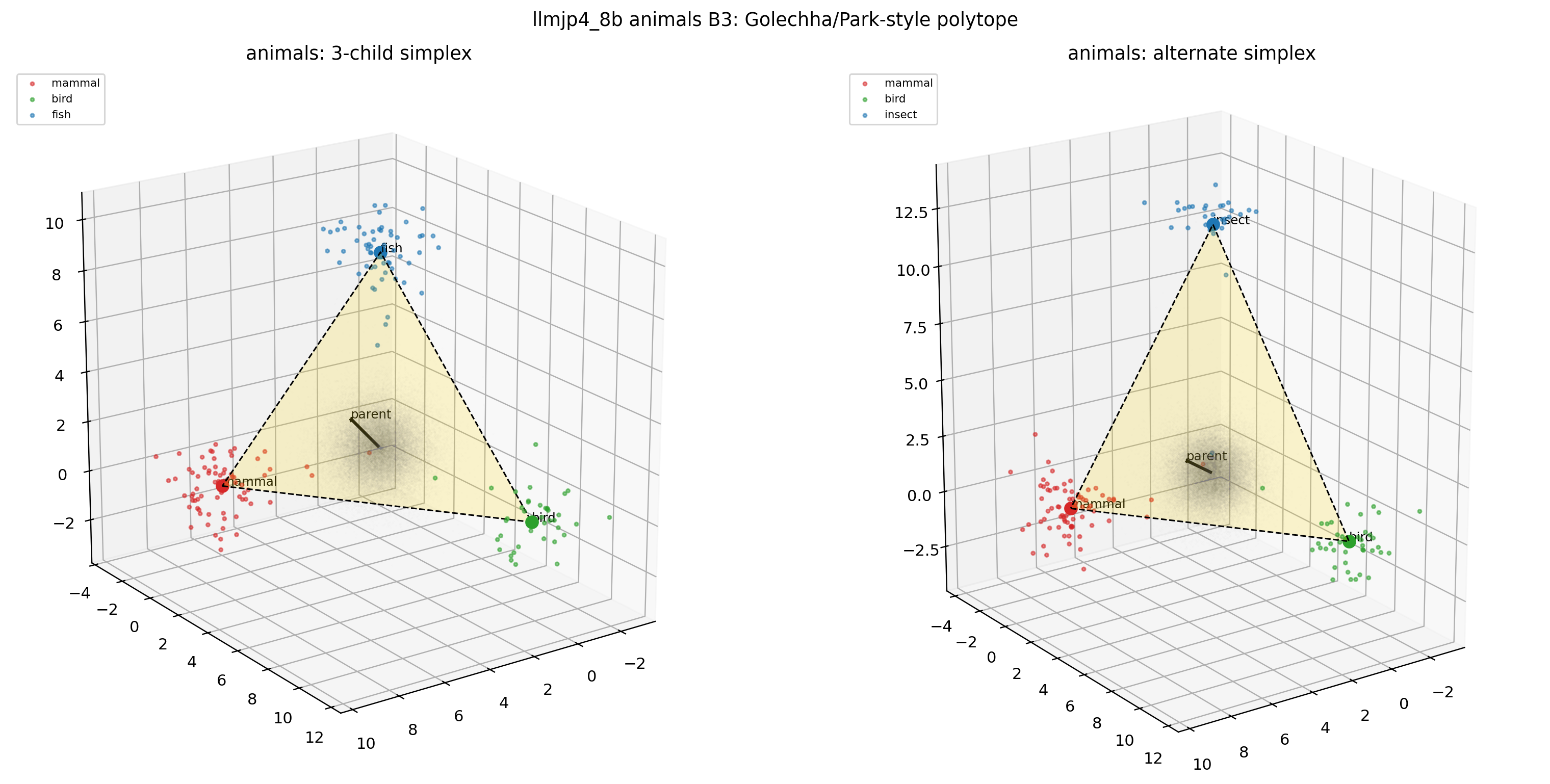
Fig 27. LLM-jp animals × B3 (post-shuffle unembedding) 3D polytope. Surprisingly, the simplex shape is not so different from B1. Source: This reproduction experiment.
B4: 70% independent subsample. Corresponds to Park's decisive control. With subsamples alone, the polytope is maintained at roughly the same degree as B1.
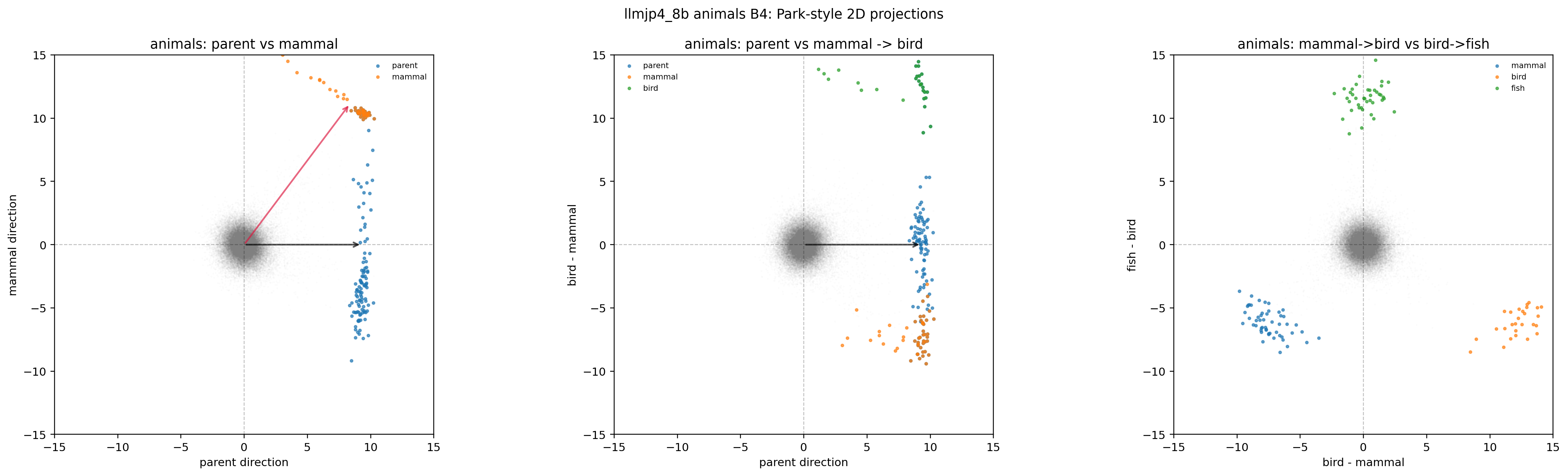
Fig 28. LLM-jp animals × B4 (70% independent subsample) 2D projection. Source: This reproduction experiment.
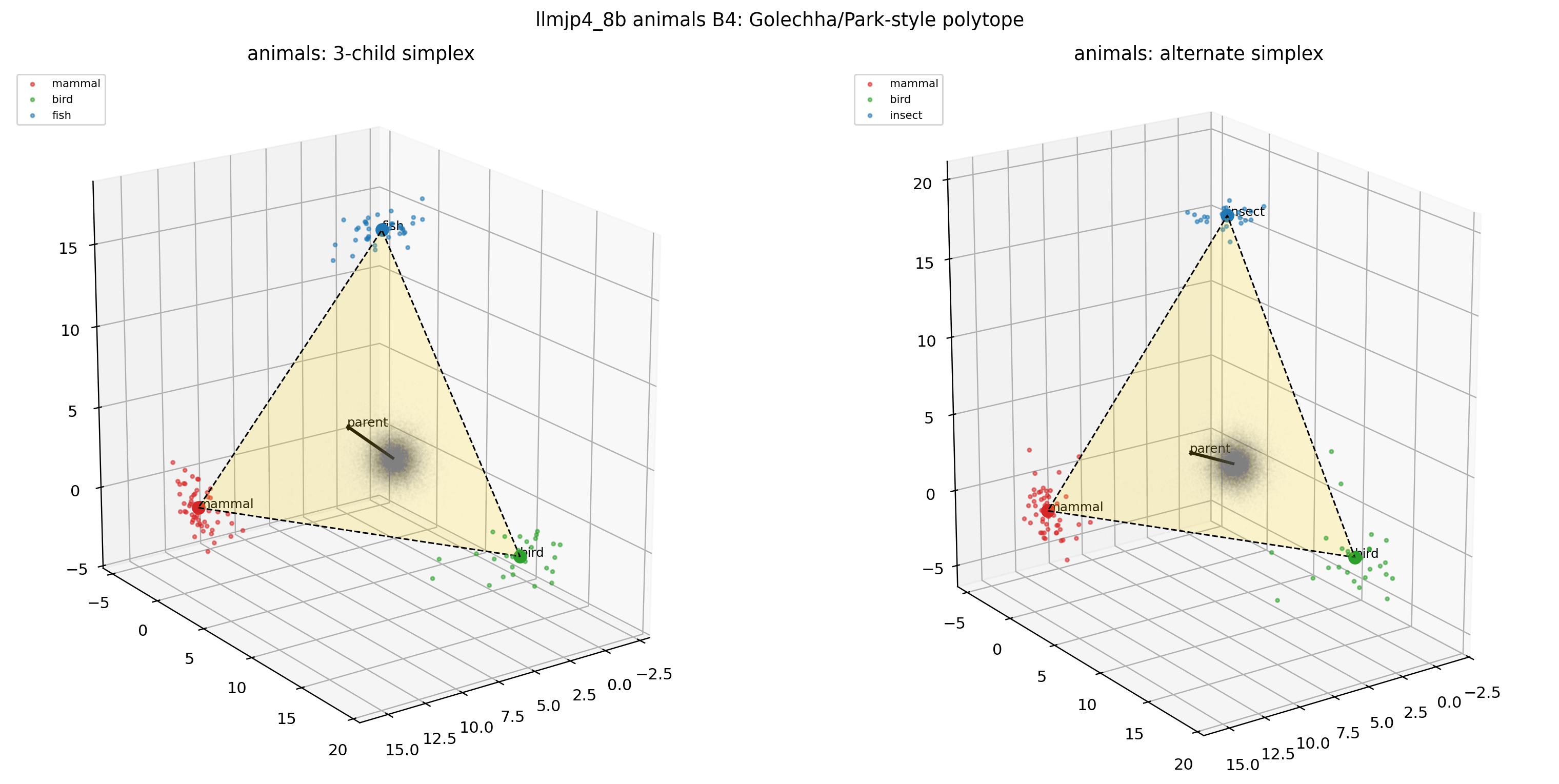
Fig 29. LLM-jp animals × B4 (70% independent subsample) 3D polytope. With subsamples alone, the polytope shape is preserved similar to B1. Source: This reproduction experiment.
B5: shuffle + 70% subsample. The core of Park's decisive control. Compared with B4, you can clearly see that the polytope vertex arrangement is disrupted. This is where the structure remaining in the trained unembedding resides.
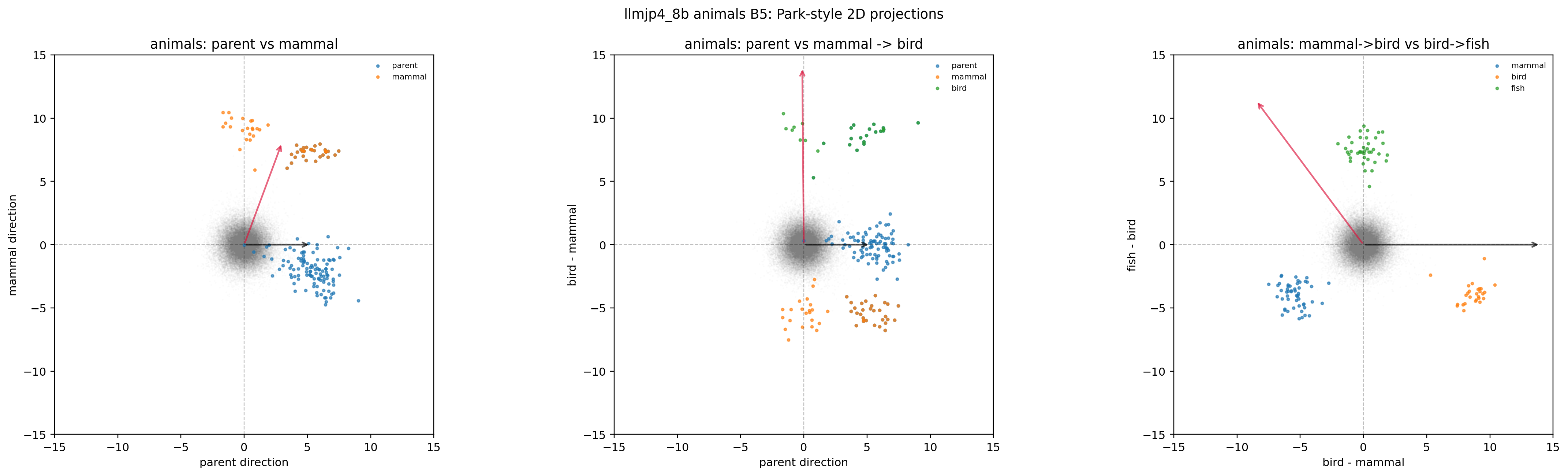
Fig 30. LLM-jp animals × B5 (shuffle + 70% subsample) 2D projection. Source: This reproduction experiment.
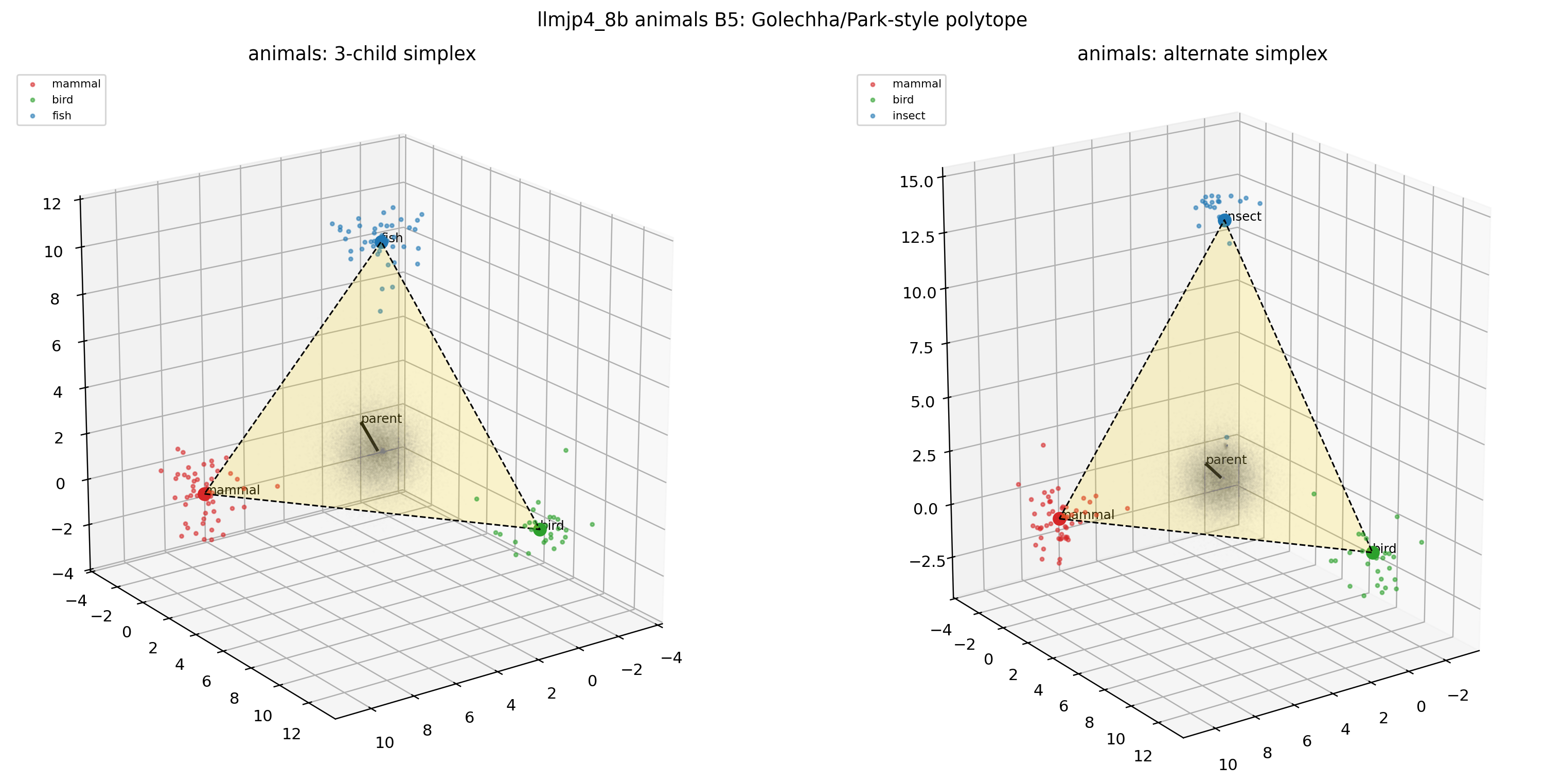
Fig 31. LLM-jp animals × B5 3D polytope. Compared with B4, the polytope vertex arrangement collapses largely — the locus of the structure that Park's additional diagnostic captures. Source: This reproduction experiment.
C5: Gaussian random unembedding. An extreme condition replacing the unembedding matrix with an untrained Gaussian. According to Park's claim, no polytope should appear at all. However, as shown in the figure, confirm that the simplex shape has not disappeared (hard to distinguish from B1). This is the decisive example of Golechha's critique.
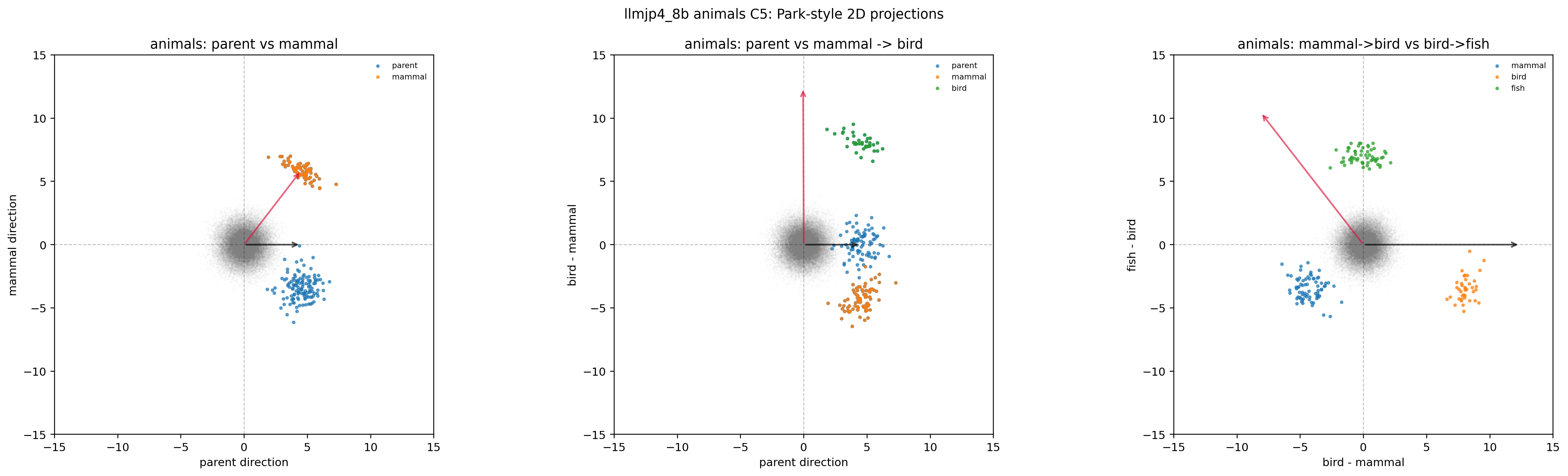
Fig 32. LLM-jp animals × C5 (Gaussian random unembedding) 2D projection. Even with an untrained random output layer, a structure-like shape comes out. Source: This reproduction experiment.
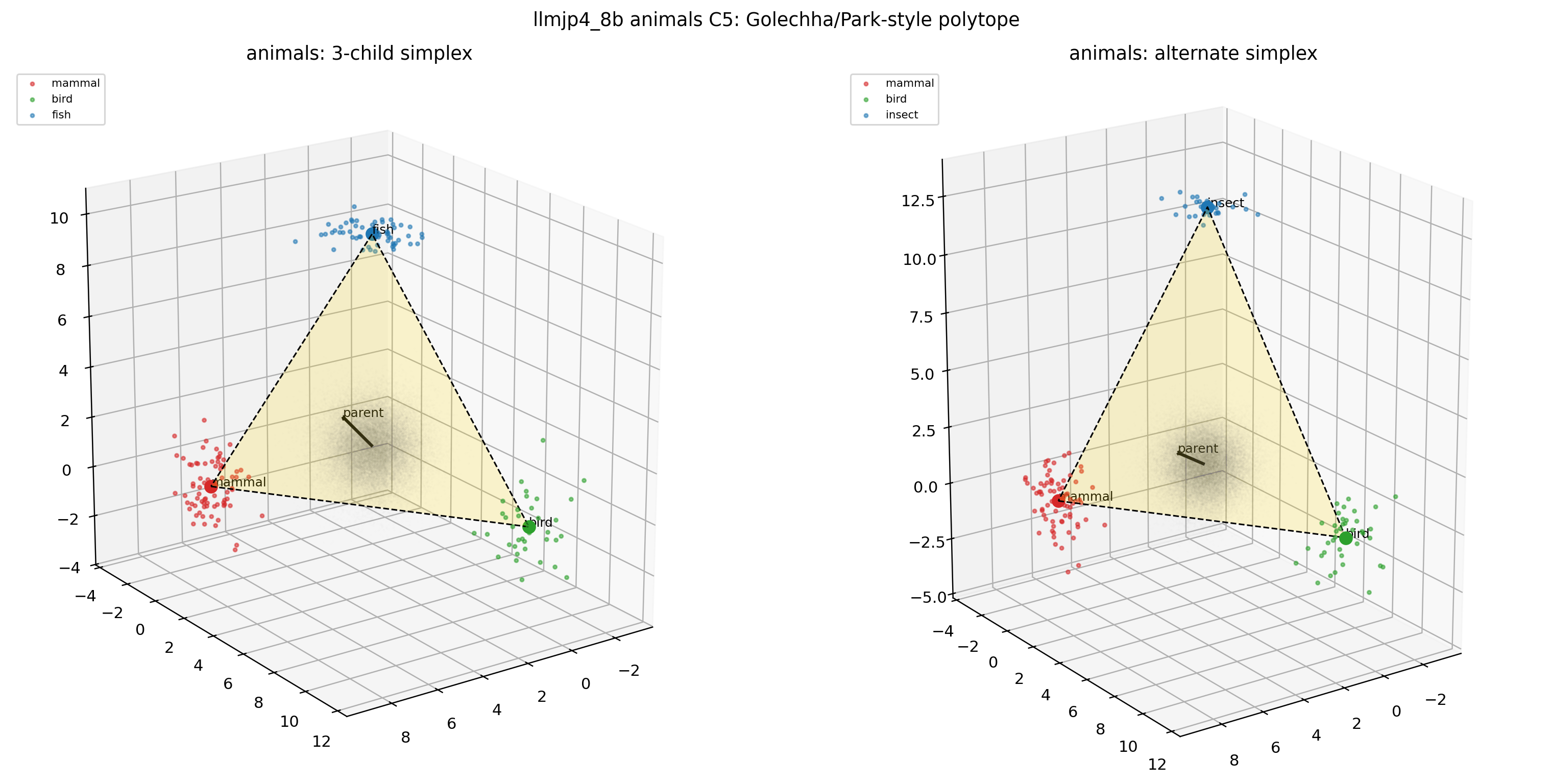
Fig 33. LLM-jp animals × C5 3D polytope. Even with an untrained random output layer, a simplex-polytope-like appearance is obtained. Source: This reproduction experiment.
What can be read from these figures is the fact that not just animals but also emotions, nonsense, and even C5 random unembedding produce, to some extent, the projection and simplex-polytope-like appearance. Golechha's claim that "from the look of the figures alone, it is hard to call them evidence intrinsic to semantic hierarchy" takes a visually convincing form on the Japanese model too. On the other hand, in B2 (random parent) and B5 (shuffle + subsample), the polytope shape largely collapses, and one can also see that Park's additional diagnostic does have the power to distinguish signal from noise.
Quantitative Results — 6 Conditions × 4 Models × 3 Datasets
Visualization alone makes judgment difficult, so as quantitative backup, we look at the cosine mean of Thm 8(a) at each condition. These are means over 30 seeds.
| model | dataset | B1 | B2 | B3 | B4 | B5 | C5 |
|---|---|---|---|---|---|---|---|
| gemma2b | animals | -0.014 | -0.174 | -0.008 | -0.049 | -0.143 | -0.002 |
| gemma2b | emotions | -0.011 | -0.206 | -0.016 | -0.047 | -0.155 | -0.004 |
| gemma2b | nonsense | -0.008 | -0.234 | -0.005 | -0.033 | -0.154 | -0.001 |
| llama3_8b | animals | -0.006 | -0.251 | -0.018 | -0.066 | -0.168 | -0.003 |
| llama3_8b | emotions | -0.004 | -0.263 | -0.021 | -0.055 | -0.148 | -0.003 |
| llama3_8b | nonsense | -0.002 | -0.293 | -0.019 | -0.053 | -0.164 | -0.003 |
| qwen35_2b | animals | -0.011 | -0.210 | -0.011 | -0.051 | -0.140 | -0.003 |
| qwen35_2b | emotions | -0.005 | -0.235 | -0.015 | -0.044 | -0.149 | -0.003 |
| qwen35_2b | nonsense | -0.004 | -0.275 | -0.012 | -0.042 | -0.160 | -0.003 |
| llmjp4_8b | animals | -0.008 | -0.295 | -0.032 | -0.085 | -0.191 | -0.003 |
| llmjp4_8b | emotions | -0.005 | -0.288 | -0.058 | -0.064 | -0.187 | -0.002 |
| llmjp4_8b | nonsense | -0.004 | -0.313 | -0.050 | -0.081 | -0.189 | -0.002 |
This table is in a form that overviews verification of Park's claims from various angles. Let us read each condition in turn.
B1(original) at -0.002〜-0.014, all near 0. As Park claims, it looks as if Thm 8(a) holds.B2(random parent) at -0.17〜-0.31 swings most largely negative among all conditions. Replacing the parent concept randomly definitely breaks hierarchical orthogonality — these are values that serve as a "destruction baseline" and give a sense of how large the value becomes when the cosine breaks.B3(post-shuffle unembedding), surprisingly at -0.005〜-0.058, is not much different fromB1. This can be read as the appearance of the property that "in high-dimensional space, cosines between random vectors approach 0."B4(70% subsample) at -0.033〜-0.085, slightly more negative thanB1but not as much asB2. With subsamples alone, the destructive effect is limited.B5(shuffle + 70% subsample) at -0.14〜-0.19 clearly swings largely negative compared withB3andB4. Only when shuffle and subsamples are combined does the structure intrinsic to the trained unembedding break. This is the most interesting number in this experiment, and means that Park's additional diagnostic has the power to discriminate here.C5(Gaussian random unembedding) at -0.001〜-0.004, almost 0. Near-zero cosines come out even with untrained random unembeddings — a direct number backing the core of Golechha's critique.
In short, the axes of opposition in the table are B1 vs C5 (both near 0 = supporting the Golechha camp) and the difference between B4 and B5 (detection of trained structure = supporting the Park camp).
Discussion
From the Golechha-style results, two claims that on the surface seem contradictory hold simultaneously.
First, one should be cautious about reading raw cosine being close to 0 alone as evidence of semantic hierarchy. Since near-zero values come out even for emotions, nonsense, and random unembedding, ample room remains for interpreting this as "a phenomenon that occurs even on data without semantic hierarchy." The core of Golechha's critique clearly holds in this experiment too.
Second, however, this does not mean all of Park's diagnostics are meaningless. Looking at the difference between B4 and B5, it appears that in the correspondence between the trained unembedding and the category token set, structure that breaks under shuffle is certainly included. This is the part where the Park-side argument can be said to have an edge.
Taking these into account, the reading of this experiment becomes an intermediate one. Linear representation hypothesis and feature geometry are useful viewpoints for talking about LLM internal representations, but one should avoid strongly asserting semantic structure from a single cosine metric alone — that is about the reasonable landing at this point in time.
Chapter 5. Summary
What We Have Shown
As reviewed in Chapter 2, LRH has gradually taken shape over a dozen-plus years. Beginning with the king-queen analogy of word2vec, then the methodology of "direction = concept" via linear probes and TCAV, Reif's visualization of BERT geometry, attention to the residual stream in the Transformer era, Elhage's superposition hypothesis and Olsson's induction heads, causal intervention via Meng's ROME and Turner's activation addition, the empirical rush of 2023 (Othello-GPT, Space & Time, Inference-Time Intervention (ITI), Contrastive Consistent Search (CCS)), the flow of Sparse Autoencoders (SAE) starting from Cunningham/Bricken through Templeton's Scaling Monosemanticity, the mathematical formalization by Park et al., Marks-Tegmark's three-fold evidence, Hernandez's dynamic extension, Engels' weak counterexample, and finally Karkada's (2026) theoretical underpinning from statistical symmetry — that has been the flow.
At its center is the opposition between Park 2024 and Golechha 2025 that this report dealt with in detail. Park stepped boldly into "categories are represented as polytopes, hierarchies as orthogonality," and prepared 3 kinds of controls to separate the triviality of his own claims. Golechha responded to this by showing that Park-style figures can also be drawn for emotions, nonsense, and random unembeddings, and threw out the doubt "isn't this a trivial consequence of whitening and high dimensions?"
What We Learned from This Experiment
In this experiment, we systematically reproduced Golechha's 3 ablations over 4 models × 30 seeds, while quantifying Park's additional diagnostics B4 and B5 for the first time. We also originally added the extension to the Japanese model LLM-jp. The observed results provide, simultaneously, two evidences in different directions for the Park/Golechha debate.
The first is evidence in the direction that Golechha's critique holds. From the fact that B1 (original) and C5 (Gaussian random unembedding) Thm 8(a) cosines stick at almost the same near-zero region (both with absolute values 0.02 or less), near-zero cosine alone cannot be called evidence intrinsic to semantic hierarchy. Since the same near-zero also comes out for emotions (no natural hierarchy) and nonsense (no semantic connection), Golechha's claim of "the triviality of whitening and high dimensions" clearly holds in this experiment too.
The second is evidence in the direction that the Park side still has some edge too. The difference between B4 (70% subsample alone) and B5 (subsample + shuffle) opens stably across all models and datasets by a width of 0.10 or more (B4 is -0.03〜-0.09, B5 is -0.14〜-0.19). This suggests that "structure that breaks under shuffle remains in the trained unembedding," and Park's additional diagnostic is not entirely a trivial artifact.
And the fact that these two observations are consistently reproduced across all 4 models (3 English + Japanese LLM-jp) shows that this is a universal phenomenon that does not depend on a specific model or specific language. The fact that the same tendency is visible even when Park's English-only experiment is extended to Japanese is something we would like to leave as a small contribution of this experiment.
Open Questions Going Forward
The most interesting homework is what the difference between B4 and B5 is capturing. What kind of structure that breaks under shuffle remains in the trained unembedding — we do not yet have a metric that characterizes that directly. How can this difference be explained within the framework of "statistical symmetry of language data" in the sense of Karkada (2026)? That is the next question that naturally comes out of this experiment.
As directions to pursue, let us list a few.
- All ablations on a full WordNet condition: This experiment compared B1〜C5 on flat datasets (animals/emotions/nonsense), but if the same ablations are done on the full WordNet, we can see differences by hierarchy depth.
- Geometric metrics other than cosine: Combined use with angular distribution, anisotropy, effective rank, and so on, may bring out structural differences that single cosine cannot see.
- Combination with behavioral intervention experiments: From the stage of "the figures and numbers can be seen" to the stage of confirming whether they actually move the model's behavior. This experiment stops at "can be seen," but ultimately verification of "does it work" is necessary.
Takeaways for the Reader
Finally, let us organize 3 points we would like the reader to take home through this report.
The first is that LRH is indeed useful as a shared vocabulary for talking about the insides of LLMs. Modern interpretability tools such as SAE and representation engineering all rest on LRH as their foundation, and it has become difficult to discuss the insides of LLMs without it.
The second is that figures and cosines looking beautiful are different from semantic structure being causally represented. In high-dimensional space, even random vectors produce near-zero cosines and simplex-like appearances, so making strong claims from a single metric alone is dangerous — that is something this experiment's B1 vs C5 comparison confirms anew.
The third is that even so, complete reduction is premature. Like the difference between B4 and B5 in this experiment, the kind of structure that breaks under shuffle is indeed observed. To dismiss all of Park-side arguments as trivial artifacts, there is still something that has not been explained.
The debate over LRH is on the way of detailed work, not of leaning toward Park or Golechha, but of separating "what kind of structure can be claimed where, and from where it should be doubted." If this experiment can serve, as part of that separation, as a reference to someone, we would be happy.
References
- Alain, G., & Bengio, Y. (2017). Understanding intermediate layers using linear classifier probes. ICLR 2017 Workshop.
- Bricken, T., Templeton, A., Batson, J., Chen, B., Jermyn, A., Conerly, T., et al. (2023). Towards monosemanticity: Decomposing language models with dictionary learning. Anthropic Transformer Circuits Thread.
- Burns, C., Ye, H., Klein, D., & Steinhardt, J. (2023). Discovering latent knowledge in language models without supervision. ICLR 2023.
- Cunningham, H., Ewart, A., Riggs, L., Huben, R., & Sharkey, L. (2023). Sparse autoencoders find highly interpretable features in language models. ICLR 2024.
- Elhage, N., Hume, T., Olsson, C., Schiefer, N., Henighan, T., Kravec, S., et al. (2022). Toy models of superposition. Anthropic Technical Report.
- Engels, J., Liao, I., Michaud, E. J., Gurnee, W., & Tegmark, M. (2024). Not all language model features are one-dimensionally linear. ICLR 2025.
- Golechha, S., Bushnaq, L., Ong, J., Kayal, A., & Schoots, N. (2025). Intricacies of feature geometry in large language models. ICLR Blogposts.
- Gurnee, W., & Tegmark, M. (2023). Language models represent space and time. ICLR 2024.
- Hernandez, E., Sharma, A. S., Haklay, T., Meng, K., Wattenberg, M., Andreas, J., et al. (2024). Linearity of relation decoding in transformer language models. ICLR 2024 Spotlight.
- Hewitt, J., & Manning, C. D. (2019). A structural probe for finding syntax in word representations. NAACL 2019.
- Karkada, D., Korchinski, D. J., Nava, A., Wyart, M., & Bahri, Y. (2026). Symmetry in language statistics shapes the geometry of model representations. arXiv:2602.15029.
- Kim, B., Wattenberg, M., Gilmer, J., Cai, C., Wexler, J., Viegas, F., & Sayres, R. (2018). Interpretability beyond feature attribution: Quantitative testing with concept activation vectors (TCAV). ICML 2018.
- Li, K., Hopkins, A. K., Bau, D., Viégas, F., Pfister, H., & Wattenberg, M. (2023a). Emergent world representations: Exploring a sequence model trained on a synthetic task (Othello-GPT). ICLR 2023.
- Li, K., Patel, O., Viégas, F., Pfister, H., & Wattenberg, M. (2023b). Inference-time intervention: Eliciting truthful answers from a language model. NeurIPS 2023.
- Marks, S., & Tegmark, M. (2024). The geometry of truth: Emergent linear structure in large language model representations of true/false datasets. COLM 2024.
- Meng, K., Bau, D., Andonian, A., & Belinkov, Y. (2022). Locating and editing factual associations in GPT (ROME). NeurIPS 2022.
- Mikolov, T., Chen, K., Corrado, G., & Dean, J. (2013). Efficient estimation of word representations in vector space. ICLR Workshop.
- Olsson, C., Elhage, N., Nanda, N., Joseph, N., DasSarma, N., Henighan, T., et al. (2022). In-context learning and induction heads. Anthropic Transformer Circuits Thread.
- Park, K., Choe, Y. J., & Veitch, V. (2023). The linear representation hypothesis and the geometry of large language models. ICML 2024.
- Park, K., Choe, Y. J., Jiang, Y., & Veitch, V. (2024). The geometry of categorical and hierarchical concepts in large language models. ICLR 2025.
- Pennington, J., Socher, R., & Manning, C. D. (2014). GloVe: Global vectors for word representation. EMNLP 2014.
- Reif, E., Yuan, A., Wattenberg, M., Viégas, F. B., Coenen, A., Pearce, A., & Kim, B. (2019). Visualizing and measuring the geometry of BERT. NeurIPS 2019.
- Templeton, A., Conerly, T., Marcus, J., Lindsey, J., Bricken, T., Chen, B., et al. (2024). Scaling monosemanticity: Extracting interpretable features from Claude 3 Sonnet. Anthropic Transformer Circuits Thread.
- Turner, A., Thiergart, L., Udell, D., Leech, G., Mini, U., & MacDiarmid, M. (2023). Activation addition: Steering language models without optimization. arXiv:2308.10248.