
Intelligence Beyond Limits.
Konoe Intelligence


Contributing to human wisdom through mechanistic interpretability — analyzing the inside of AI.
We are a team of mechanistic interpretability researchers and AI engineers.
Fundamental understanding of AI → returning it to human wisdom → improving AI → understanding the new AI.
We create this cycle of recursive co-improvement.
Applying this technology —
contributing to LLM evaluation, detection of suspicious behavior, and new scientific discovery as
Intelligence from seeing inside AI
Safety
LLM evaluation
Third-party evaluation that detects scheming, deception, and evaluation gaming through internal analysis — delivering independent results that hold up for developers and regulators alike.
AEGIS — Whitebox Model Safety Evaluation
Learn more →
Detecting latent bias and sandbagging (deception)
Measuring jailbreak resistance from the inside
Security
Building guardrails
Guardrails built on interpretability that suppress only unwanted outputs without hurting capability. The implementation is registered as Japanese patent No. 7909349.
Blog
All Blog →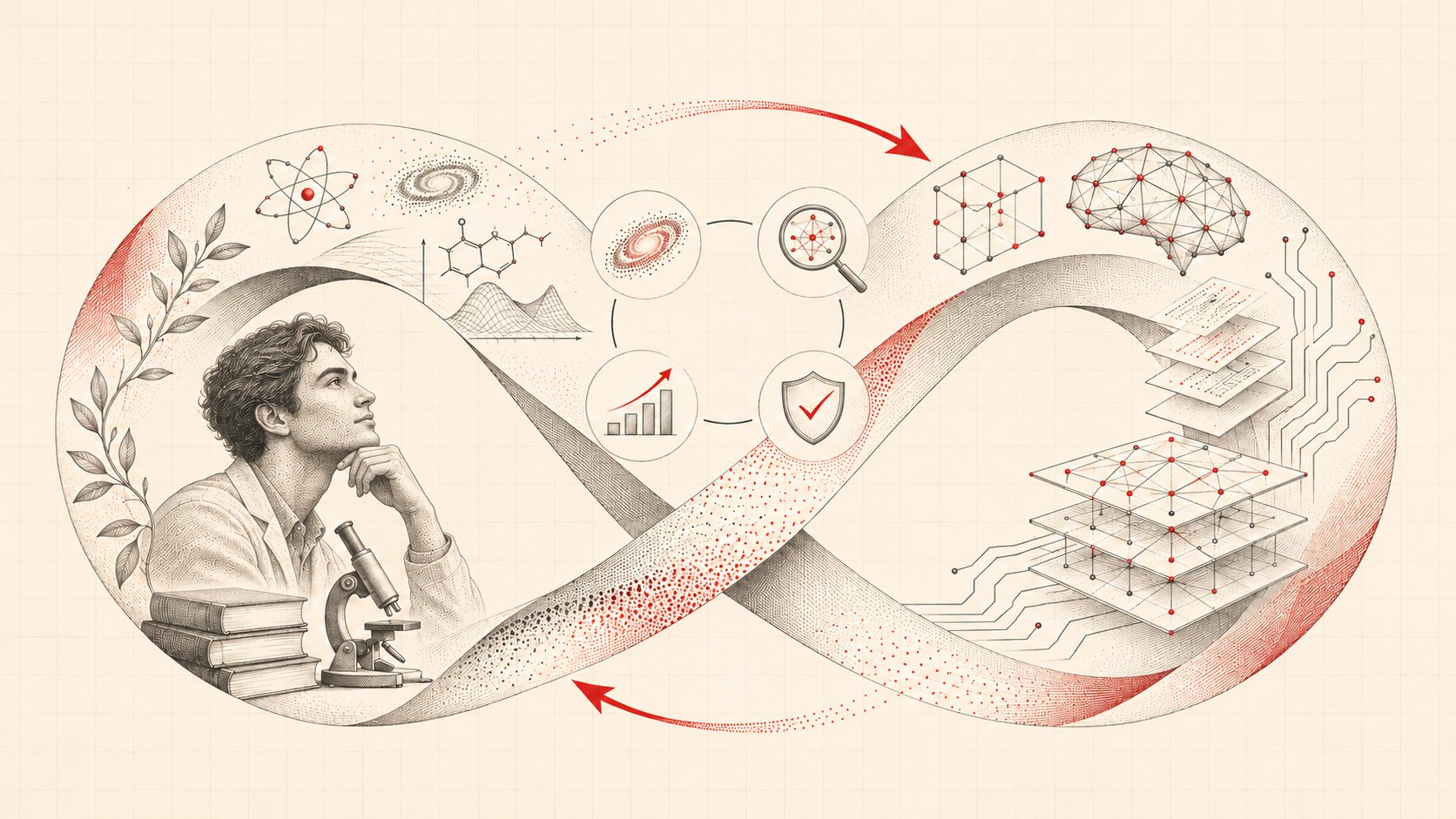
Recursive Co-Improvement
In the age of Recursive Self-Improvement, where AI improves AI, humanity should improve itself recursively as well. Through interpretation faithful to a model's internal computation — Computational Faithfulness — we learn from AI, and with that knowledge make AI smarter and safer. The cycle of understanding AI → human learning → improving AI → understanding the new AI: Recursive Co-Improvement is the AI research we aim for.

Observing Internal Manipulations of AI with the J-Lens
How much do harmfulness-related concept words change in rank after taking the DiM? A comparison of J-Lens readouts before and after subtraction.

Do Keys Call Up What They Should? Swapping Cached Values and Rotary Phases Between Positions of the Same Context
Keys are assumed to act as addresses and values as content, but whether the value called up through a key really holds the fact it should has rarely been tested. We exchange cached keys, values, or rotary phases between two tokens of one input, let only the final position read the edited cache, and test the correspondence directly.